
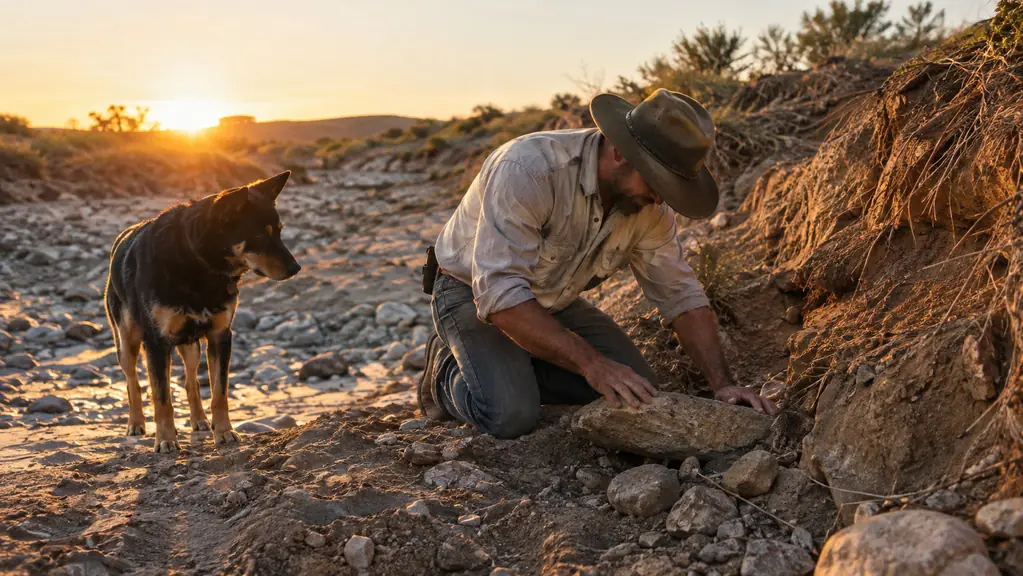
The dog found it first. That's how it usually goes when Biscuit and I walk a desert wash south of Tucson. He was nosing at a cut bank where last winter's flood had undercut the gravel, and when I knelt to see what he thought was so interesting, I saw a dull brown lump the size of a baseball sticking out of the clay. The outside was plain as dirt. But the way the late sun caught one edge told me there was agate inside.
That afternoon is the reason this INCLY rock pick kit now lives in my truck instead of the garage. I've been tumbling rocks in my shop for about twelve years, and I've ruined more good specimens with the wrong tool than I like to admit. Too big a hammer cracks the stone. Too small a chisel slips and scars the face. By the time I got serious about collecting, I'd learned to carry a proper kit, and the INCLY set is the one I reach for on day trips.
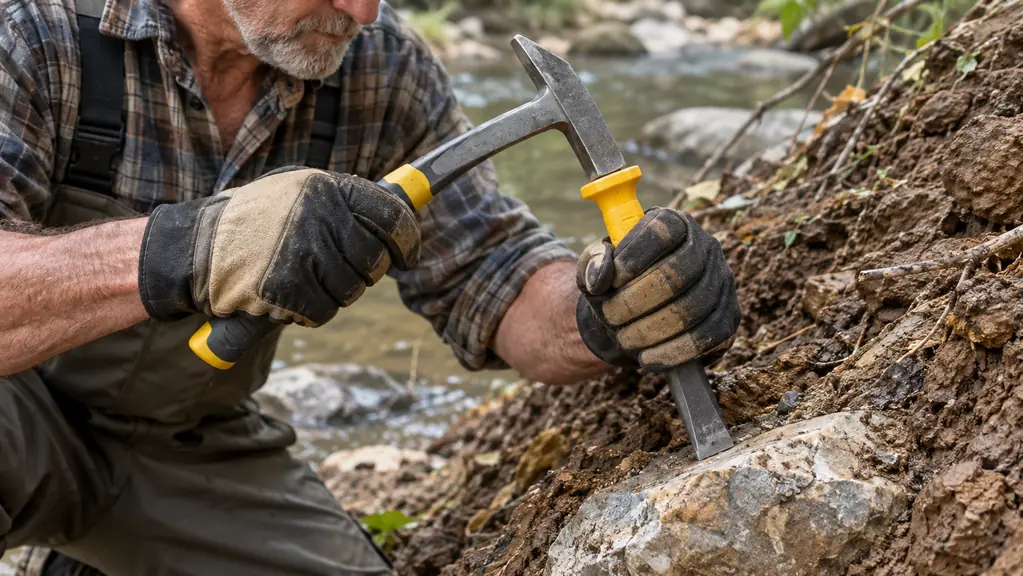
The kit comes with a hammer, several chisels in different widths, a pair of safety glasses, gloves, and a canvas bag that holds the whole thing. Nothing fancy, which is what I like. It's a practical starter set that covers the basics without a bunch of gadgets you'll never use. I've seen folks spend three times as much on tools that mostly sit in a case, and this kit actually goes out the door with me.
Here's what happened at that cut bank. I set the chisel against the clay a couple of inches below the nodule, gave it a firm tap with the hammer, and worked my way around in a slow circle. The INCLY chisels have a decent edge straight out of the box, and the hammer has enough weight to make progress without so much force that every tap threatens the stone. After about twenty minutes I could rock the nodule in its socket. Another ten and it came free in one piece, a grapefruit-sized chunk of mud-caked agate that cleaned up into one of the better finds of my year.
What impressed me was the control. A cheap hammer sends vibration up your arm and makes every strike a guess. This one balances well, and the chisel heads fit the stone without skating off. I got the nodule out with the matrix intact, which matters if you like to see how a piece sat in the ground before you tumble it. For the kind of rockhounding most of us do, creek beds and washes, that control is worth more than any fancy feature.
I'll also tell you what the kit isn't. The hammer is on the light side for busting hard rock like quartzite, so if that's your game, you'll want a heavier crack hammer. And the chisels will need a touch-up on a whetstone after a season of hard use, which is normal for anything in this range. It's a field kit, not a demolition kit, and it's honest about that.
In forty minutes that nodule was out of the bank in one piece, matrix intact, and I hadn't cracked a single face.
The Right Tool Is the Difference Between a Specimen and a Gravel Pile
The INCLY 15-piece kit covers the basics I used that afternoon: hammer, chisels, safety glasses, gloves, and a bag to carry it all. It's how I'd outfit a beginner today.
Amazon Check Today's Price on Amazon →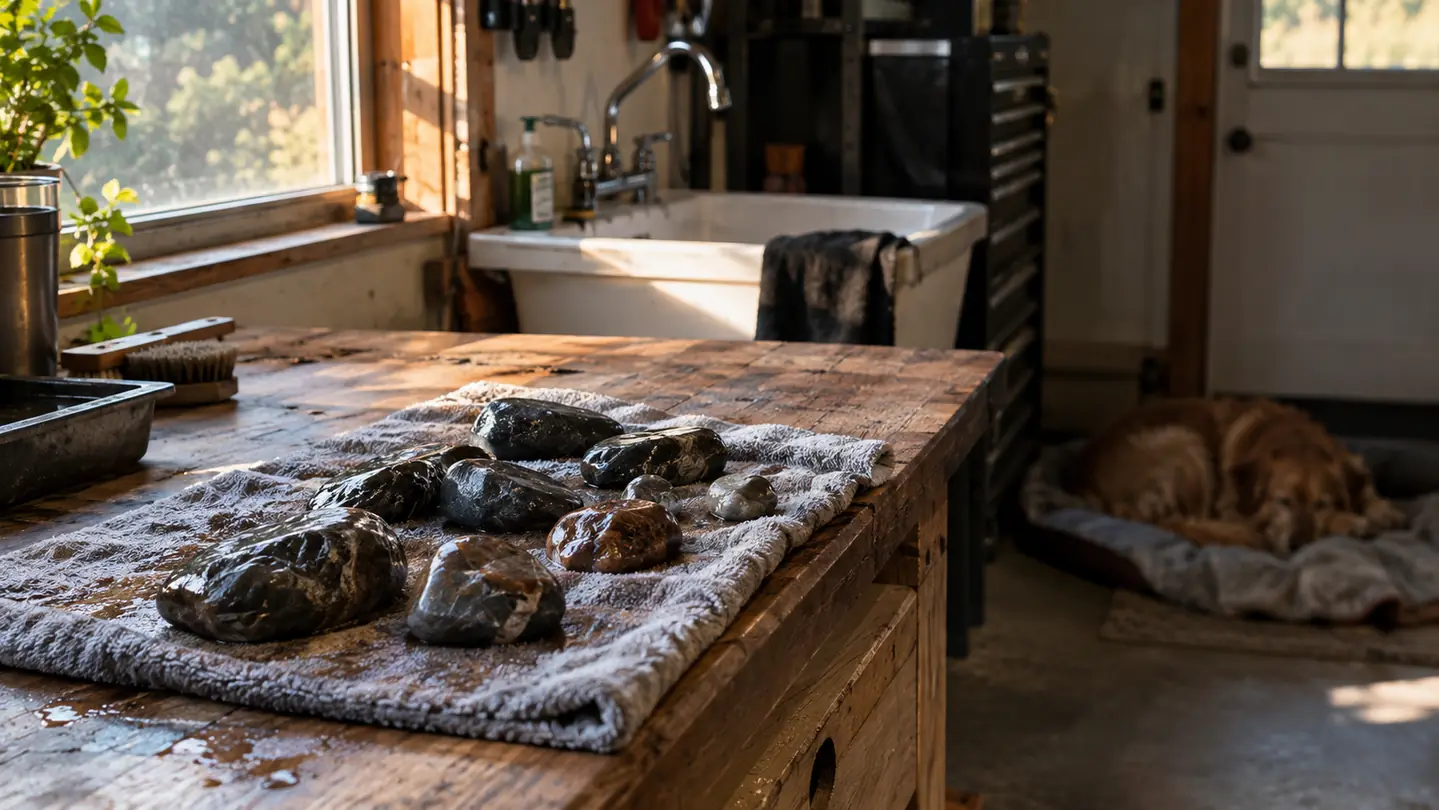
The rest of that afternoon went the same way. We worked up the wash for another couple of hours, and I pulled three more pieces worth bringing home, including a small chunk of fire agate that I still haven't decided how to cut. Biscuit supervised from the shade. The kit went back in its bag, the bag went back in the truck, and by the time we got home I hadn't lost or broken a single piece.
Back at the workbench, I rinsed the pieces in the utility sink and laid them out on a towel. That's my favorite part of a collecting day, the sorting. Some go in the tumbler, some go on the shelf, one or two go back outside because they're better left where they were. A good field kit doesn't just help you find rocks. It helps you bring them home the way you found them.
If you're new to this, the advice I'd give is simple: don't buy a single cheap hammer and call it a kit. You'll chip your knuckles, scar your specimens, and quit after two trips. Start with a set that covers the basics, wear the safety glasses that come with it, and learn to read the ground before you swing at anything. That's the whole course, and it's the same one I've been teaching myself for twelve years.
The creek bed where I found that agate is still out there, and so are a dozen others I haven't walked yet. That's the thing about this hobby. The rocks aren't going anywhere, but your knees are, so it pays to make the trips count. The INCLY kit is part of how I do that.
What I'd Tell You If We Were Sitting at My Kitchen Table
Pour yourself some coffee, because here's the honest version. You do not need an expensive outfit to enjoy rockhounding. You need a hammer that fits your hand, a chisel that holds an edge, eye protection you'll actually wear, and the patience to work a specimen out slowly. The INCLY kit covers the first three, and the fourth is on you. It's the same kind of gear I'd hand a friend who wanted to come along. Start there. Walk the washes. Bring home what you find. In a year you'll have a shelf full of rocks and a lot of good afternoons, and that's the whole point.
Your Next Day Trip Deserves the Same Head Start
If you're going to spend your Saturdays prying rocks out of desert washes, spend them with tools that hold up. The INCLY kit is where I'd tell anyone to start.
Amazon Check Today's Price on Amazon →