
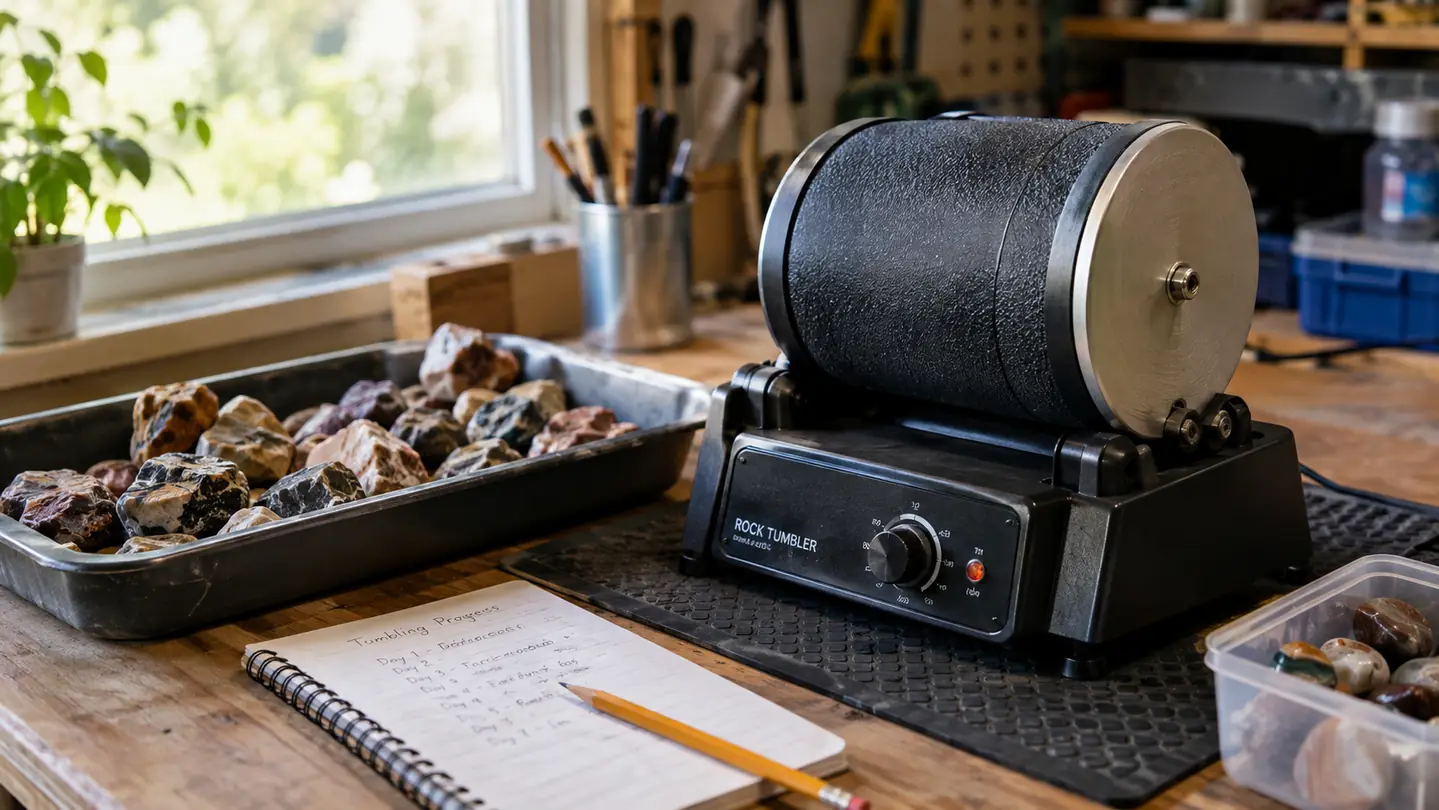
I have run a rock tumbler in my Tucson garage for about twelve years now, and I have learned to read the little white lies in product listings. Advanced. Professional. Most of those words are aspirational. So when my old secondhand tumbler finally smoked its motor in September, I took my time choosing the replacement. The Dan&Darci Advanced Professional Rock Tumbler Kit was the one I kept coming back to, and last fall it showed up on my workbench. I treated it the way I treat any new tool: I laid out every part, read the thin manual twice, and ran a full batch before I trusted it with anything I actually cared about.
That was October. This review covers a season of weekend batches since: the rough grind, the medium grind, the fine grind, and the polish, over and over, on creek gravel from Aravaipa and wash stones from the Catalina foothills. I kept notes the way I keep notes on the lathe, batch number, date, grit charge, water level, and what came out of the barrel. What follows is what I would tell you if you pulled up the stool next to my bench.
The Quick Verdict
A capable rotary tumbler with a genuinely useful digital timer. The barrel seals, the controls are plain, and the kit includes enough grit and media for two or three finished batches. It is loud without a mat under it, and the instructions are thin. Neither one is a reason to walk away.
Amazon Check Today's Price →A Tumbler That Keeps Its Own Schedule
The digital 9-day timer is not a gimmick. Set the stage, walk away, and come back when the cycle ends. For a weekend hobbyist, that is the difference between tumbling rocks and babysitting rocks.
Amazon Check Today's Price on Amazon →How I've Used It
The kit comes as one box. There is no real assembly beyond setting the barrel on the rollers and plugging the base in. Mine has sat on the same spot on the garage floor since October: a rubber mat on the concrete, the barrel on the rollers, the digital display facing the bench so I can read it from the stool. My dog Biscuit, a nine-year-old red heeler mix who naps on a blanket in the corner, has made his peace with it, mostly.
My routine, every other Saturday: fill the barrel about half to two-thirds full of rough stones, add the measured grit charge, add water until it just covers the stones, seal the lid, set the timer for the stage, and walk away. The machine stops itself when the time is up. The notebook on the bench gets a page for every batch: date started, stone source, grit, water level, timer setting, and what came out.
That notebook is the part that actually makes you better at this hobby. The tumbler is a motor and a barrel. The judgment is yours. After six months I can look back at the pages and see exactly which mistakes cost me a batch, and which stones were worth a second pass through the polish. A machine cannot give you that. Only records can, and a little patience.
The Digital Timer Is the Whole Story
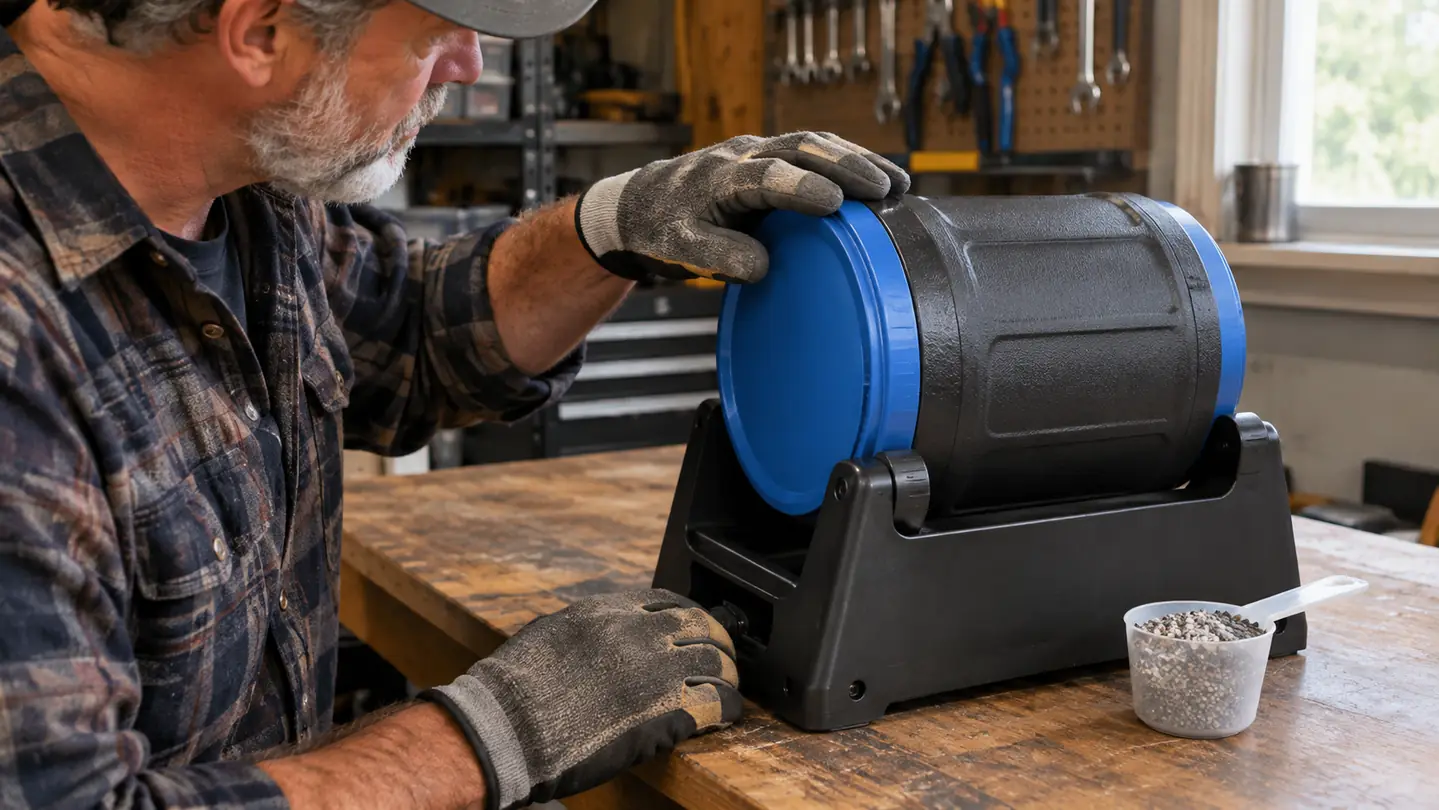
Most hobby tumblers in this class use a mechanical dial that clicks around a clock face. The Dan&Darci unit uses a digital display and push buttons, and you set the run time in hours. The 9-day claim in the title just means it will count down a full coarse-grit week without stopping. I set mine for 168 hours on the first batch and it shut itself off right on schedule.
That matters more than it sounds. If a rotary tumbler runs dry, the stones bang against each other and the barrel liner takes a beating. A timer that stops the machine on its own is the cheapest insurance you can buy. I have owned one mechanical timer that stuck and ran a barrel for three weeks, which turned a batch of decent jasper into a barrel of fine dust. The digital unit on this one has not drifted once in six months of weekend use.
The controls are plain enough that I did not need the manual, which is good because the manual is thin. Two buttons set the hours, one starts, one stops. The display is bright enough to read from across the garage. That is all I want from a control panel. I have used tumblers that required a degree in scheduling to operate. This one does not.
Grit, Stages, and the 9-Day Cycle
The kit includes four grit stages and a bag of ceramic media. Coarse grit runs about seven days, medium about five, fine about five, and polish two to four depending on the stone. The instructions say to run each stage for the full cycle and clean everything between stages. I follow that, with one addition: I rinse the stones and the barrel until the water runs clear before switching stages. Leftover coarse grit will scratch the polish stage, and that is the most common way beginners ruin a batch.
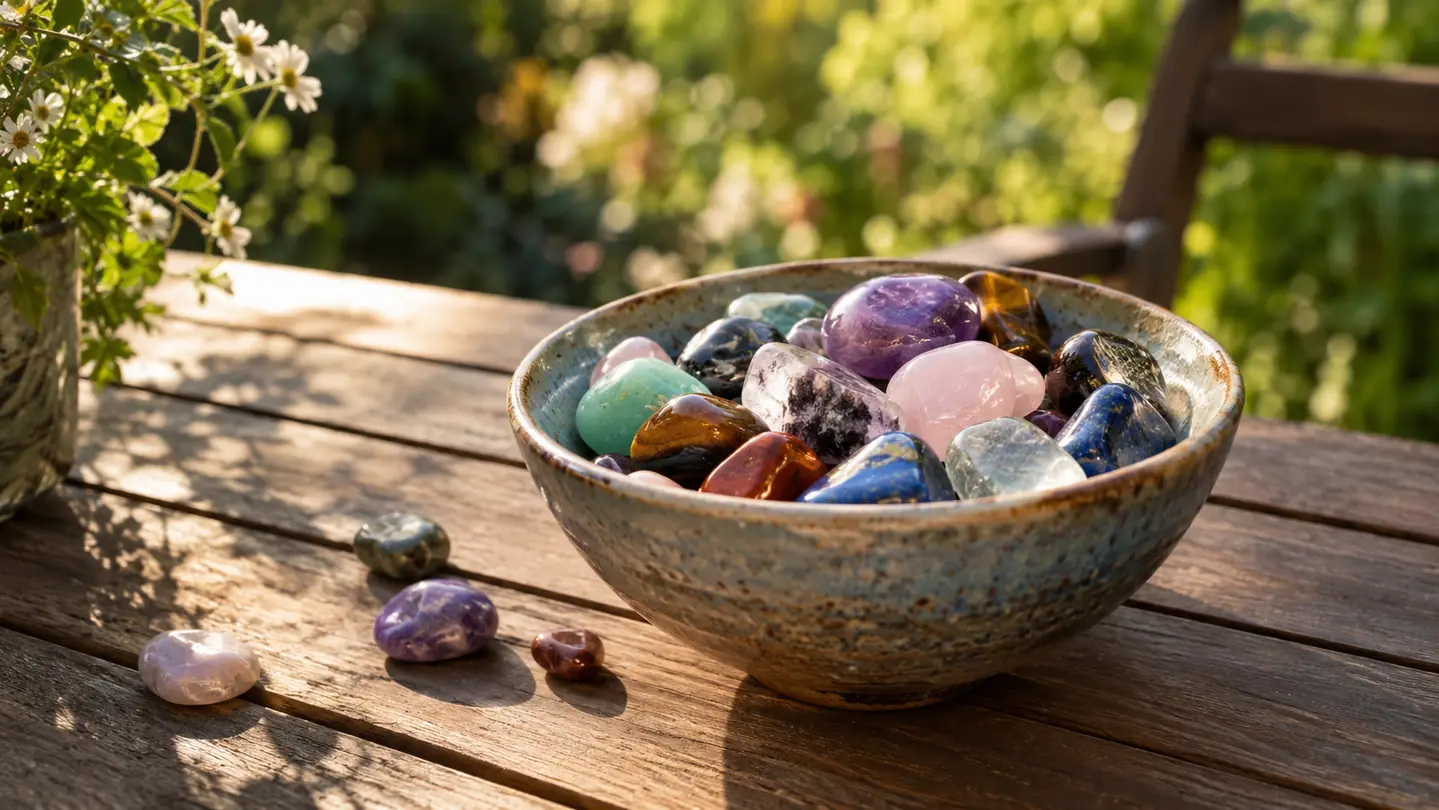
A season of weekend batches gave me six finished loads. The best came out of a load of moss agate from a wash east of town. The honest math is this: about a third of every batch comes out with the gloss you see in the product photos. Another third is presentable, good enough for the garden or a gift box. The last third goes back into the barrel for another run, or ends up as driveway gravel. That ratio is normal. It is the nature of the material, not a fault of the machine.
The ceramic media included in the kit earns its place. It fills the empty space in the barrel so the stones polish against media instead of against each other. I add more with each stage as the load shrinks. If you buy a second bag of media early, you will not regret it. The grit packs themselves are generous enough for two or three full batches, and after that you will be buying grit by the pound like the rest of us.
Sort your stones before the first stage. Soft stones like calcite or marble will not survive a week with hard agate; they grind away to mud and carry grit into every later stage. I sort by scratching a stone with a knife blade. If it scratches, it goes into a separate soft-stone batch. That five-minute test has saved me more batches than any other habit I have.
Noise, Placement, and Biscuit
A rotary tumbler is loud. Not drill-loud, but a steady rumble and rattle that carries through walls. Biscuit hates it. The first time I ran the Dan&Darci, he got up from his blanket, walked to the far corner of the yard, and gave me a look that said I had betrayed the household.
Placement fixes most of the noise. I set the tumbler on a rubber mat on the concrete floor instead of on the workbench, because the bench amplifies the vibration like a drum head. The mat and the slab kill most of the rattle. The motor hum remains, but it is the steady kind you stop hearing after ten minutes. Biscuit has moved back into the garage, though he still eyes the barrel when it starts up.
If you live in an apartment, put the tumbler on a rubber mat inside a closet or in a bathtub. Noise is the single biggest reason people quit this hobby, and it is also the easiest problem to fix. A cheap rubber mat and a little distance beat a complaint from the neighbor downstairs. And if you have a dog that hates rattling, give them a closed door between you and the barrel.
One more note on placement: keep the tumbler off the workbench if the bench touches the house wall. The wall turns the whole frame into a speaker. Mine is on the floor in the middle of the garage, and the difference is night and day. If the garage shares a wall with a bedroom, run the loud stages during the day.
Care and Maintenance Between Batches
The barrel liner is the part that wears out first on any tumbler, and it is the part people forget to clean. I rinse mine out after every stage and let it dry before the next load. A half hour of drying beats a batch that smells like old grit. The outside of the barrel gets wiped down when I switch stages, because a gritty barrel leaves grit on the rollers, and grit on the rollers wears the motor bearings.
The rollers themselves need almost nothing. I check them every few batches for a flat spot, and I wipe the grit dust off with a dry rag. That is the whole maintenance schedule. A rotary tumbler is about as close to a set-and-forget machine as this hobby offers, provided you clean between stages and never run it dry.
If you plan to run the machine every weekend, buy a spare barrel liner when you buy the kit. The liner is the only part that truly wears out, and having a spare means a cracked liner does not shut down your hobby for a week while you wait for shipping. I keep mine in a drawer under the bench with the extra grit.
Alternatives I Considered
A neighbor runs a National Geographic tumbler, and I have spent enough time around it to have an opinion. Both machines use the same rotary idea and both have digital timers. The full comparison lives here (dan-darci-rock-tumbler-vs-national-geographic) for anyone torn between the two, but the short version is this: the Dan&Darci wins for me on the barrel seal and the simplicity of the controls, and the National Geographic is a perfectly good machine in its own right. You would not be wrong to choose either one.
If you are still deciding whether a rotary tumbler suits you at all, the ten reasons are here (10-reasons-rotary-rock-tumbler-suits-beginners). The short version: it asks for about fifteen minutes of your attention twice a week, it runs on tap water and grit, and it turns rocks you found for free into something you can give away at Christmas. That trade has suited me for twelve years, and it will probably suit you too.
What I Liked
- Digital timer counts down and shuts off on its own
- Barrel lid has not leaked once in six months of weekend batches
- Four grit stages and ceramic media included
- Plain controls and a display I can read from across the garage
- Rubber barrel liner quiets the load and protects the stones
Where It Falls Short
- Loud without a mat underneath, and never truly quiet even with one
- Instructions are thin; a notebook and patience teach you more
- A third of every batch needs a second pass or a trip to the driveway
- The included grit runs out after two or three batches
After six full batches, about a third of the stones come out with the gloss you see in the product photos. The rest teach you patience.
Who This Is For
Buy this one if you are a beginner who wants a real rotary tumbler with a timer you do not have to watch. If you can give it fifteen minutes twice a week, if you have a corner where the noise will not drive the household crazy, and if you are comfortable with the fact that half the value is the grit and the other half is your own patience, this kit is a sensible place to start.
It is also right for a parent who wants a hobby to share with a kid old enough to respect the two rules: do not open the barrel mid-cycle, and never run stones without water. The timer makes it easy to hand a child a real responsibility. Start the batch together on Saturday morning, check it together the next Saturday, and let the kid pour the stones out onto the screen. That is how the hobby sticks.
Who Should Skip It
Skip it if you want instant results. The first time you open the barrel after the coarse grind, the stones look worse than when you started, and that moment disappoints a lot of people. I have seen grown adults swear off tumbling forever over one ugly coarse-grind reveal. Give it four stages before you judge the machine.
Skip it if you live in a thin-walled apartment with no place to muffle the noise, and skip it if what you actually want is a vibratory tumbler, which is a different tool for a different job. This is a rotary tumbler, built for the classic slow cycle. It will never be the fastest way to polish a stone, and it was never meant to be. It is the patient way, and it works.
What a Season of Batches Taught Me
For a season of weekend batches, the Dan&Darci ran every cycle, kept its seal, and turned free creek gravel into presents. If that sounds like your kind of hobby, the current price on Amazon is the number to check.
Amazon Check Today's Price on Amazon →