
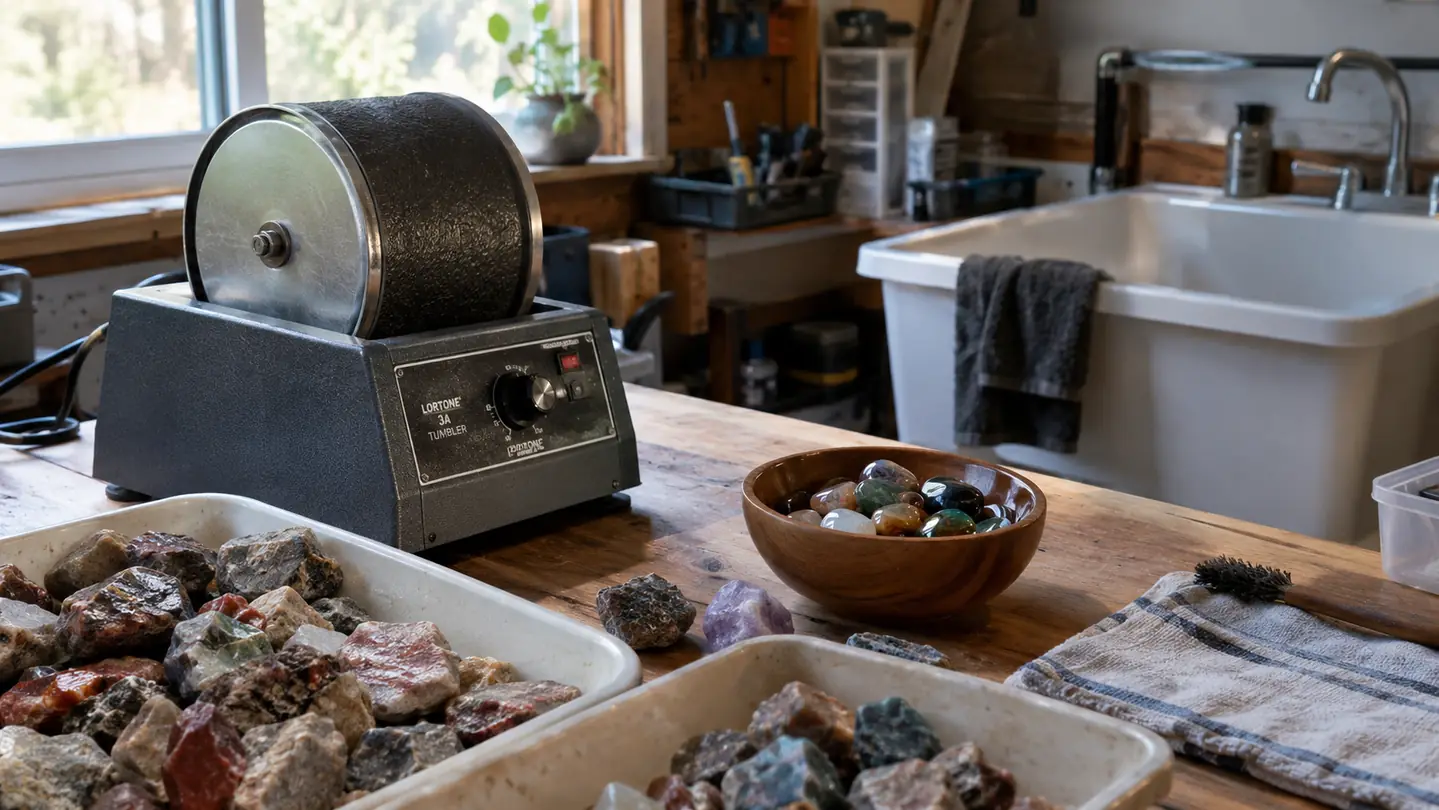
Every winter I walk the Tucson gem show, and every winter I do the same thing. I stand at a dealer's table, pick up a rough stone, and think, I've got a box of those in the garage. The polished cabs in the display cases next to them are the reason I started tumbling rocks in the first place, about twelve years ago. This past January, a batch of rough agate from the show finally came out of the tumbler with a shine I was proud to show Carol. The machine that did it was the Dan&Darci rock tumbler kit, and this is the story of how those rocks got from a dealer's bin to my kitchen windowsill.
Before I get into the machine, you should know what I was working with. My old tumbler was a simple two-speed rotary unit I'd picked up at a garage sale. It tumbled fine, but the timing was guesswork. I'd start a batch, forget to check it, and come back three weeks later to find the grit had broken down and the stones had started banging against each other. I ruined more than one batch of decent rock that way, and I'll admit, a couple of those batches were my own fault for not paying attention. The hobby rewards patience, but it also rewards a timer you can set and trust.
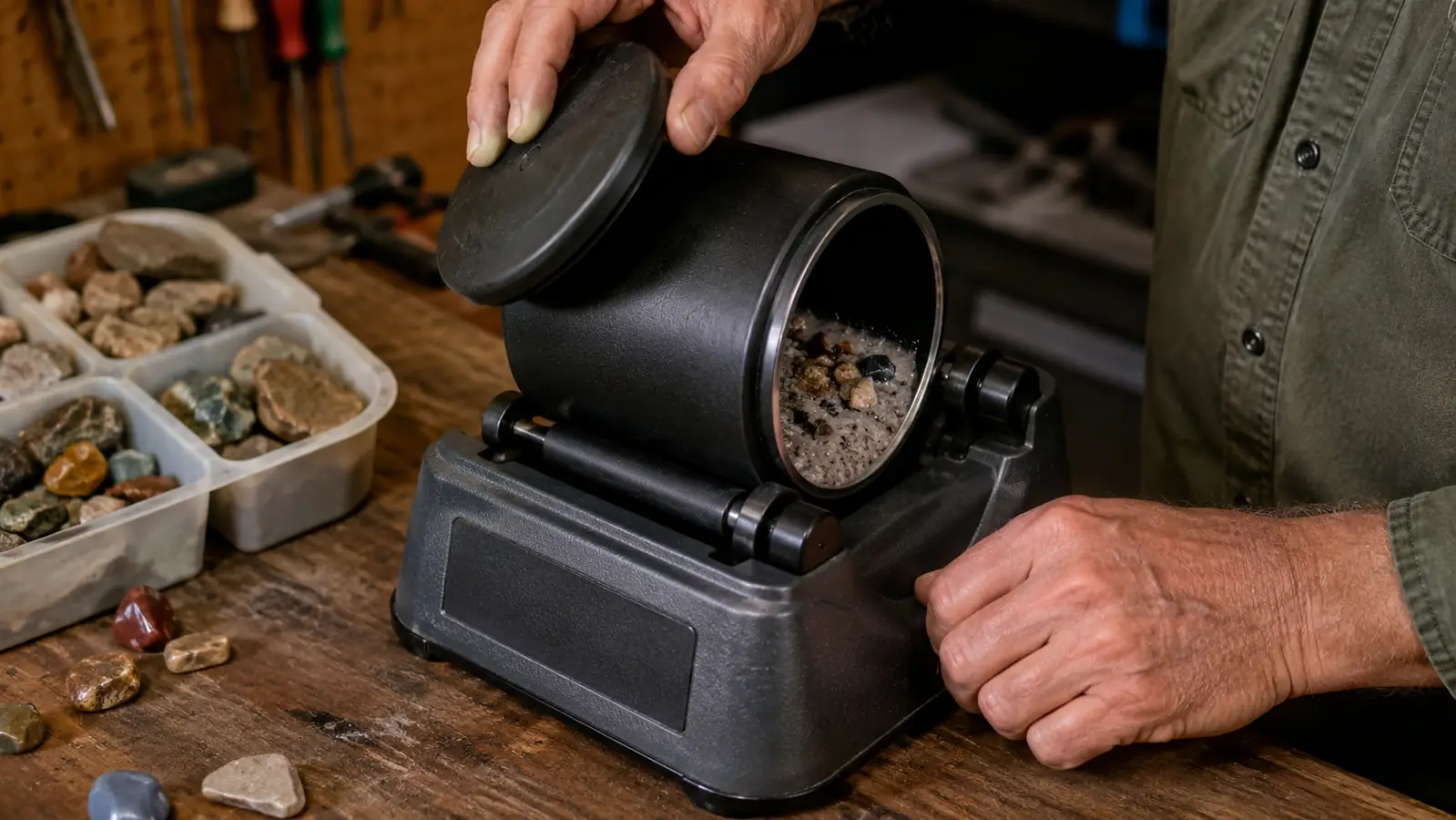
The Dan&Darci kit solved the part I'm worst at. The digital timer runs a nine-day polishing cycle, which means I set the stage, close the lid, and let it do the work. It does four weeks of tumbling in about nine days because it runs the coarse grind, the medium grind, the pre-polish, and the final polish back to back. Each stage has its own grit, and the kit includes enough of each to finish a full batch. For a guy who used to mark calendar days with a grease pencil, that was a genuine upgrade.
I'll be honest about the noise, because Biscuit, our nine-year-old dog, has strong opinions about it. He naps on a blanket in the garage, and a tumbling barrel makes a steady low rumble that he mostly ignores. The Dan&Darci is quieter than my old machine, but it is not quiet. I put the tumbler at the far end of the workbench, away from his blanket, and on the second day he stopped caring entirely. Placement matters as much as the machine.
I set it once, walked away for nine days, and opened the barrel to the first batch of agate I was proud to show Carol.
Set it once, come back to a shine in nine days.
The Dan&Darci kit runs the full coarse-to-polish cycle on a nine-day timer, with the grit included. If you want to stop guessing when a batch is done, check today's price on Amazon.
Amazon Check Today's Price on Amazon →Now, about those gem show rocks. The rough agate I brought home in January came from a dealer who sells by the pound from plastic bins. I picked out maybe six pounds of pieces the size of my thumb, the kind with enough banding to look good once they were cut down. I sorted them by size at the workbench, rinsed them in the utility sink, and loaded the barrel about two-thirds full. That fill level matters. Too full and the stones don't move. Too empty and they slam into each other. Two-thirds, with water to just below the top of the rocks, and the right amount of coarse grit.

The first stage runs about three days on the nine-day cycle. When I checked the barrel after the coarse grind, the rough edges were gone and the stones felt smooth to the touch, like beach glass. The next stages do the fine work. The pre-polish and final polish are where the shine actually happens, and the difference between stage three and stage four surprised me. What looked like a nice matte finish turned glossy in the last two days. I pulled the batch out, rinsed each stone, and dried them on a towel on the workbench.
Here's the part nobody tells you about tumbling: the final result depends on the rock, not just the machine. Some of my agate came out with a mirror shine. A couple of softer pieces came out with a decent finish but not a glassy one, because the stone itself just doesn't take a high polish. That's the honest tradeoff. The Dan&Darci runs the process correctly, but it can't make every rock a display piece. I sorted the good ones into a bowl on the kitchen windowsill and put the rest in the garden as accents.
I've run three batches through it since January, including a batch of creek stones from a day trip out near the wash. The second batch taught me to clean the barrel thoroughly between stages, which the instructions call out and I skipped once. A little leftover coarse grit in the final polish stage will scratch the stones. That was my mistake, not the machine's, and it cost me a batch of otherwise nice jasper. Rinse the barrel, run a quick wash cycle with plain water, then start the next stage.
What I'd Tell You If We Were Sitting at My Kitchen Table
If we were sitting at my kitchen table, I'd tell you this. Buy the grit in bulk, because you'll go through it faster than you expect. Keep a notebook with the date, the stone type, and the stage for every batch, because you will not remember it three weeks later. Set the tumbler somewhere you can hear it, so you know it's running, but not somewhere it will drive everyone crazy. And start with rocks you don't care about, because your first batch is practice. The Dan&Darci kit made my gem show rocks look good, and it's the first tumbler I've owned where the timer did its job without me hovering over it. That's the whole review, in plain words.
A nine-day cycle that does the waiting for you.
If you're tired of hovering over a tumbler and checking dates on a grease pencil, this is the kit I'd start with. It's rated 4.5 stars across thousands of Amazon reviews. Check today's price on Amazon.
Amazon Check Today's Price on Amazon →