
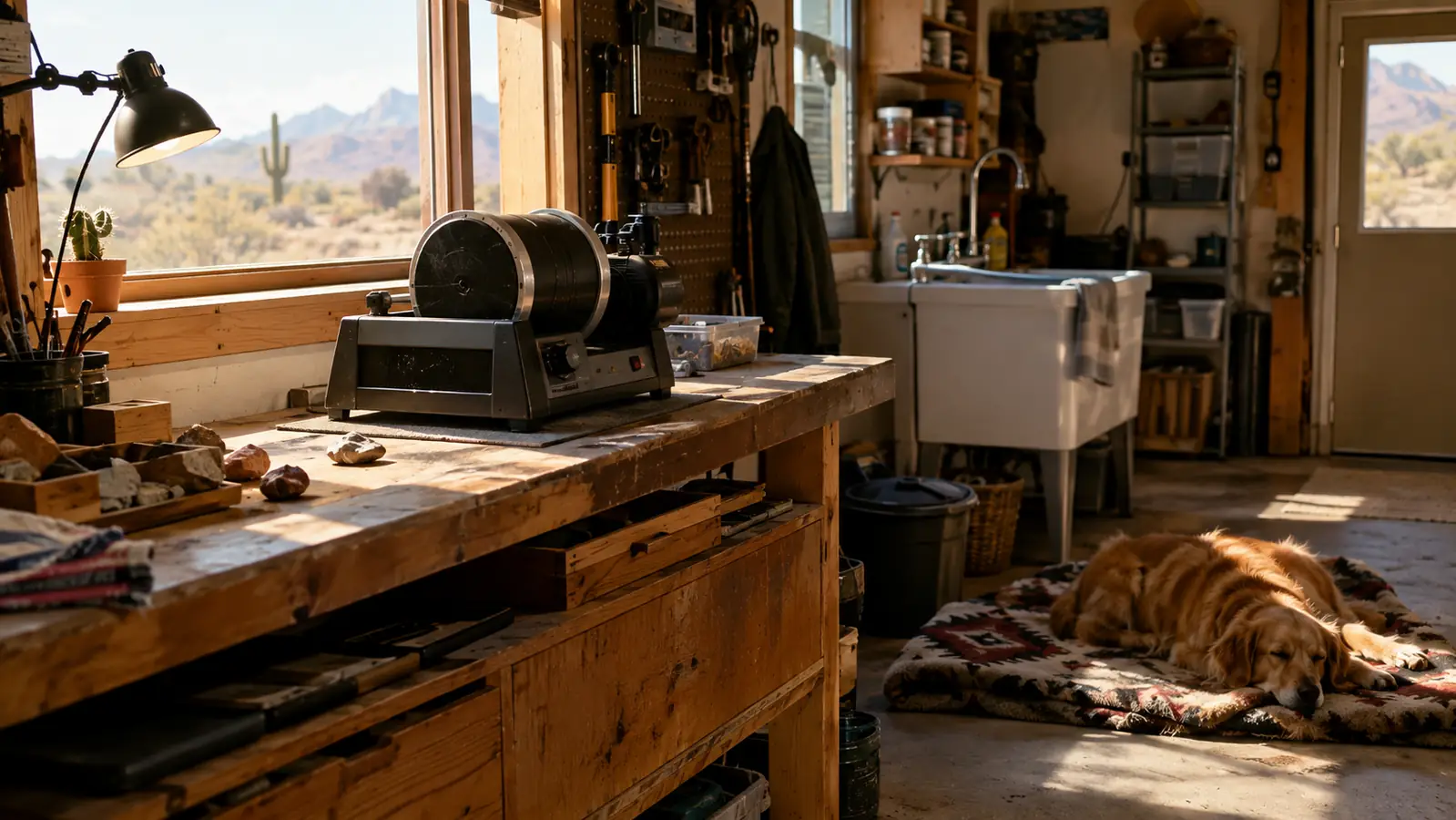
I have been tumbling rocks in my Tucson garage for about twelve years, and I still remember the batch I ruined in year two. I ran the coarse stage too long, let the barrel run dry, and opened it to find a slurry of broken agate and grit that looked like somebody had dropped a bag of gravel in a blender. The lesson stuck: the grit you feed a tumbler matters more than the machine. When the National Geographic Grit Kit showed up on my bench, I treated it the way I treat any new tool. I ran it through a full season of batches, kept notes, and let the results speak.
This is the long-term review I wish somebody had handed me before I started. It covers the four-stage grit kit from Blue Marble, the company behind the National Geographic brand, and what it actually does to a barrel of rough stone over months of use.
The Quick Verdict
A dependable four-stage grit kit that does exactly what it promises. The coarse stage cuts fast, the polish stage shines, and the price is fair. It is not the cheapest grit on the market, and the bags are smaller than I would like, but for a hobbyist who wants consistent results without fuss, this is the kit I reach for.
Amazon Check Today's Price →The grit kit I keep coming back to after twelve years of tumbling
If you are tired of dull batches and uneven shine, the National Geographic Grit Kit is the four-stage set I trust on my own bench. Check today's price on Amazon and see why it earns a permanent spot in my garage.
Amazon Check Today's Price on Amazon →How I've Used It
I ran this kit through six full batches over about eight months, from the second week of October through the end of May. Each batch was a standard three-pound load of mixed stone from creek beds and desert washes around Tucson, plus a few pieces I picked up at the gem show last winter. I weighed the stone on the kitchen scale Carol lets me borrow, because the recipe depends on the weight. One tablespoon of grit per pound of rock, two tablespoons of water, and a barrel that is about two-thirds full. That ratio has never let me down, in this kit or any other.
The first batch I ran with the coarse grit for seven days, the medium for five, the fine for five, and the polish for six. I checked the barrel every morning before coffee, listened for the right sound, and opened it at the end of each stage to rinse and inspect. Biscuit, my red heeler mix, naps on a blanket in the garage while I work, and he only gets up when the barrel starts rattling too loud. That noise check is my informal way of knowing the load is moving the way it should. A barrel that thumps instead of rolls means the stones are sliding, not tumbling, and that is usually a sign the load is too light or the barrel is too full.
I kept a notebook with the date, the stone type, the stage, and the result. That notebook is the reason I can tell you this kit is consistent. In November I tried to rush a batch by skipping the fine stage and going straight from medium to polish. The stones came out smooth but milky, with a dull haze that no amount of extra polishing would lift. I had to run that batch through the fine stage and the polish stage again, which cost me two weeks and a bag of grit. The kit did not fail. I did. When I followed the stages in order, batch after batch, the coarse stage took off the rough edges, the medium smoothed the surfaces, the fine stage prepped the stone, and the polish stage brought up a shine I could see across the garage.
The most memorable run was a batch I started on the first Saturday of February, right after the gem show. I had picked up a pound of moss agate from a vendor at the show, and I wanted to see what this kit would do with it. I ran it through the full four stages and kept the notebook close. On the last day of the polish stage, Carol came out to the garage to see what all the quiet was about. I held up one of the stones, a piece about the size of a thumbnail, and she said it looked like something you would buy in a jewelry case. That is the kind of result this kit produces when you give it time.
What's in the Kit and How the Stages Work
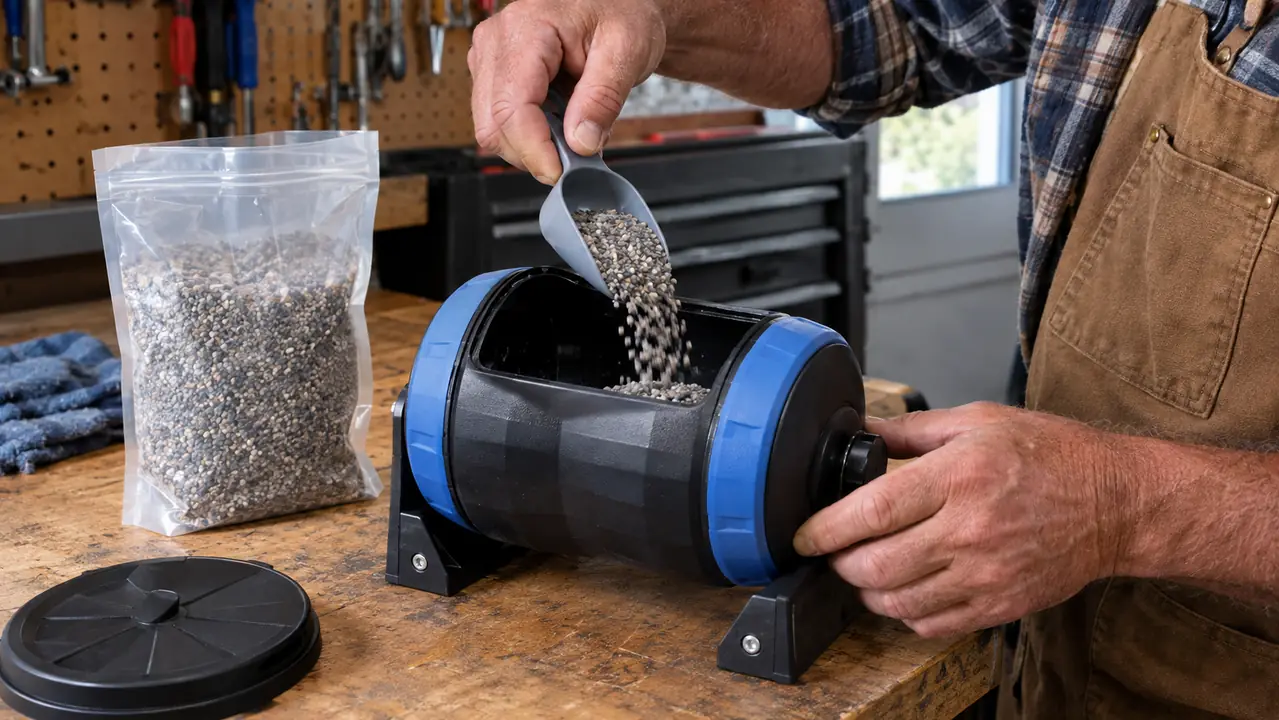
The National Geographic Grit Kit from Blue Marble comes with four bags of grit and polish, one for each stage of the tumbling process. The coarse grit is the workhorse. It grinds down the rough surfaces and shapes the stone. The medium grit refines the surface, the fine grit smooths it further, and the final polish stage brings out the shine. Each bag is labeled clearly, which sounds like a small thing until you have a shelf full of unmarked containers and you cannot remember which one is which. I keep my old bags in a coffee can, and the labels are the only reason I can tell the difference between the fine grit and the polish at a glance.
The grit is a silicon carbide blend, which is the standard for rock tumbling. It cuts consistently and holds up through a full week in the barrel. I have used cheaper grit that broke down too fast and left me with a barrel of mud. This kit did not do that. The coarse stage held its edge for the full seven days, and the polish stage left a finish that caught the light. I tested the polish on a piece of banded calcite about the size of a walnut, a stone that usually comes out looking chalky, and it came out with a soft gloss that surprised me.
One thing I will say honestly: the bags are not huge. If you tumble constantly, you will go through the kit faster than you expect. I got about two full three-pound batches out of the coarse bag before I needed to order more. That is not a complaint, just a heads-up for anyone who plans to run a tumbler every week. I would rather have a bag that runs out on schedule than one that lasts forever and cuts like soap, and this grit runs out on schedule.
I keep a dedicated tablespoon measure in the grit cabinet, the one with the long handle, and I never use it for anything else. Grit has a way of finding its way into the kitchen if you are not careful, and Carol does not appreciate grit in her measuring spoons. I also write the date on each bag when I open it, so I know how long a bag has been sitting. Grit does not go bad, but it can pick up moisture in a humid garage, and a damp bag of fine grit will clump and cut unevenly. This kit's bags seal well enough for my setup, and I have not had a clump problem in the eight months I have been using it.
Performance Over Time: What the Results Look Like
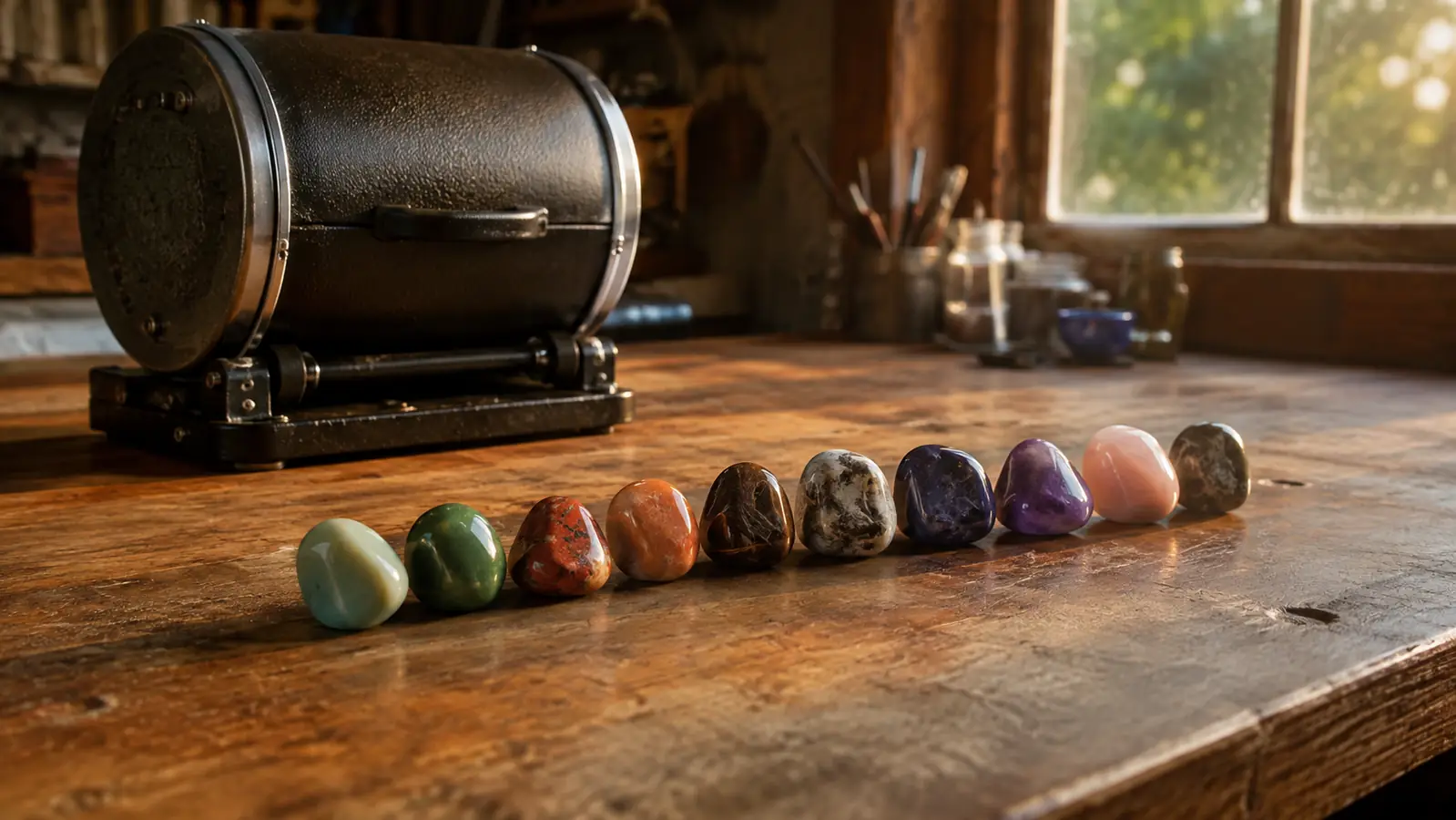
The real test of any grit is what comes out of the barrel. I ran a batch of mixed agate, jasper, and quartz through the full four stages, and the difference between the first stage and the last was dramatic. The rough stones that went in looked like something you would kick aside on a trail. What came out after the polish stage looked like something you would put in a display case. I lined them up on the bench in order, one stone from each stage, and the progression was plain to see: pitted and sharp, then smooth, then silky, then glossy.
I keep a jar of finished stones on the windowsill above the utility sink, and my favorite is a piece of banded agate about the size of a quarter. It went in with a chip on one edge and came out with a mirror shine that shows the bands all the way through. The jump from stage three to stage four is where that happens. Stage three leaves the stone smooth to the touch but still a little flat in the light. Stage four is where the surface closes up and the color deepens. That last step is the whole reason to bother with polish instead of stopping at fine grit.
I also tested the kit on softer stone, like calcite and some of the desert material I find around Tucson. Softer stone needs a lighter touch, and the kit handled it fine as long as I shortened the coarse stage and checked the barrel more often. On a batch of calcite I cut the coarse stage to four days instead of seven, and I opened the barrel every morning to make sure the stone was not breaking down into powder. The grit does not care what kind of stone you feed it, as long as you adjust the timing. What it cares about is being used in the right order.
Not every piece comes out perfect, and I would not trust a review that claims otherwise. One piece of jasper came out with a small pit that no amount of polishing would close, because the pit was a crack that ran through the stone. That is not a grit problem. That is a stone problem, and it happens with every brand I have used. What this kit does is give every stone its best chance. The stones that fail, fail because of what they are, not because the grit gave up on them.
The jump from stage three to stage four is the most noticeable part of the whole run. That is where the stone goes from smooth to glossy.
Tradeoffs and Alternatives I Considered
I have used a lot of grit over the years, from bargain bags to specialty blends. The National Geographic Grit Kit sits in the middle of the pack on price and near the top on consistency. The bargain grit I tried early on saved me money on each batch, but it cost me time and a couple of ruined loads. One bargain brand I bought at a big-box craft store turned to mud by the fourth day of the coarse stage, and I did not realize it until I opened the barrel and found the stones barely shaped. The specialty blends from rock shops are excellent, but they cost more and are harder to find in one kit. At the gem show last February, a vendor sold me a pound of polish that came out beautifully, but when I went back for more he was out of stock and could not tell me when he would get more.
For most hobbyists, this kit is the sweet spot. It is not the cheapest, but it is reliable, and reliability is what saves you money in the long run. A batch of stone that comes out dull because the grit broke down is a batch of stone you have to run again, and that costs you time and electricity. I counted the days once on a bad batch of agate and figured I had wasted close to a month of running time and the better part of a weekend cleaning the barrel. Blue Marble makes a consistent product, and consistency is the thing I am actually paying for when I buy grit. The bags run out, sure, but they run out doing what they are supposed to do.
The other thing worth knowing is what the kit does not include. There is no ceramic media in the box, and for some batches you will want it. Small stones and pieces with deep crevices need filler to keep the barrel at two-thirds full and to carry grit into the tight spots. I keep a bag of ceramic cylinders on the shelf and add a scoop to every batch of small agates. That is true of every grit kit I have used, so I do not hold it against this one, but it is worth budgeting for if you are just starting out.
What I Liked
- Consistent silicon carbide grit that holds up through a full stage
- Clear labels on every bag, which saves you from guessing
- The polish stage delivers a genuine shine, not a dull finish
- Simple four-stage recipe that works for beginners and experienced tumblers alike
Where It Falls Short
- Bags are smaller than I would like for frequent tumbling
- Not the cheapest grit on the market
- Coarse stage can be too aggressive for soft stone if you do not adjust the timing
Who This Is For
This kit is for the hobbyist who wants consistent results without a lot of fuss. If you are new to tumbling, the labeled bags and the standard four-stage recipe make it easy to learn. If you have been tumbling for years, the consistency of the grit means you can trust your process and focus on the stone. It is also a good choice for anyone who wants to give a tumbler as a gift, because the kit includes everything you need to finish a batch. I handed a spare kit to my neighbor when he got a tumbler for Christmas, and his first batch came out better than my first batch did back when I started.
Who Should Skip It
If you tumble in bulk, running multiple barrels every week, you will probably want to buy grit in larger quantities. The kit is convenient, but the bag sizes are better suited to the occasional batch. If you are on a tight budget, there are cheaper grit options out there, though you may trade away some consistency. And if you only tumble soft stone, you might find the coarse stage too aggressive for your material. For the rest of us, the ones who run a barrel or two a month and want the stones to come out looking like something, this kit is hard to beat.
Ready to see what your rough stone can become?
The National Geographic Grit Kit from Blue Marble is the four-stage set I trust on my own bench. Check today's price on Amazon and give your next batch the finish it deserves.
Amazon Check Today's Price on Amazon →