
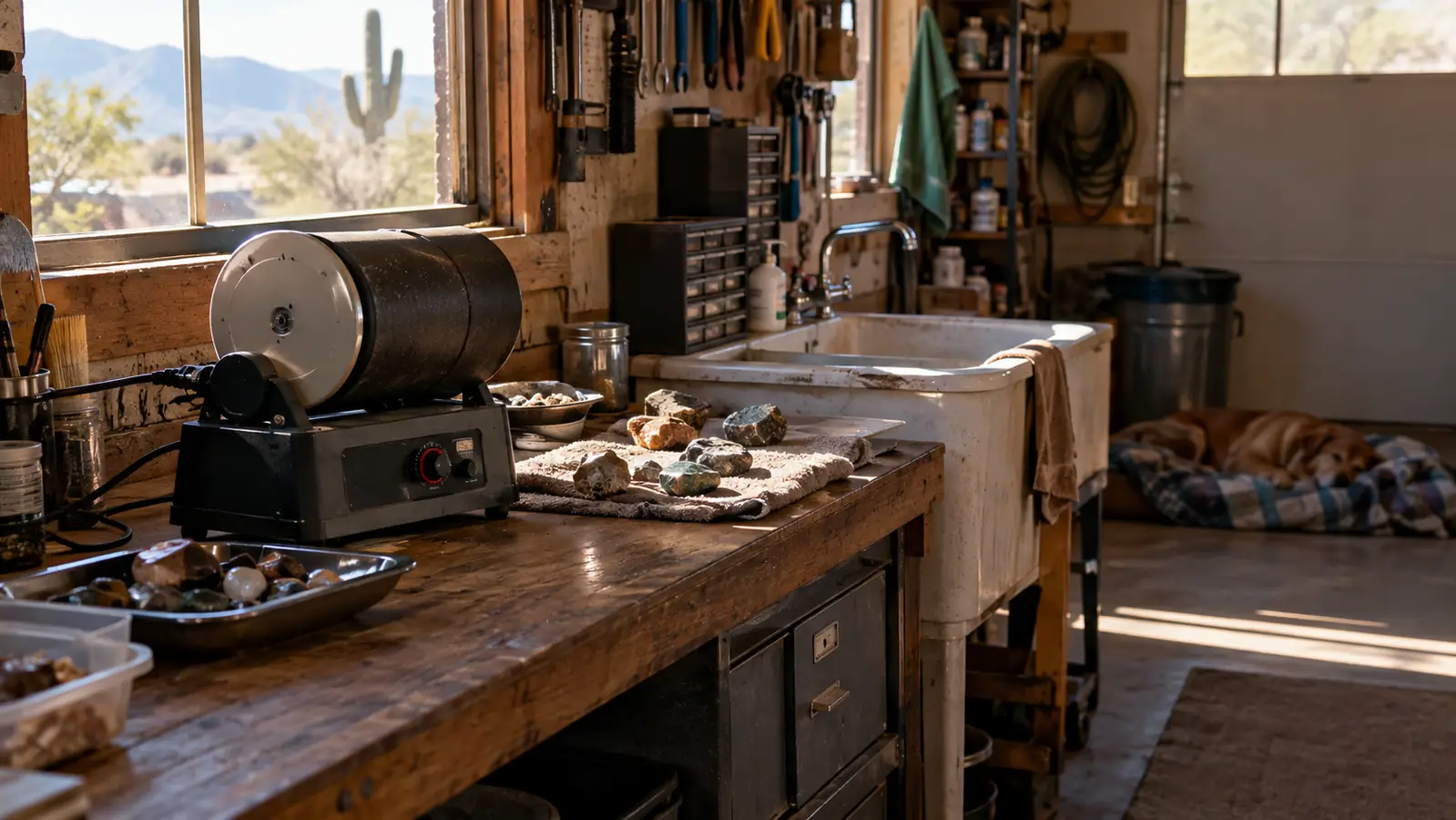
If you tumble rocks in your garage long enough, you end up with a shelf of half-used grit bags and a strong opinion about which refill kit is worth buying again. I have been at it for about twelve years now, and I have run both the National Geographic Rock Tumbler Grit and Polish Refill Kit from Blue Marble and the Polly Plastics grit set through the same barrels, the same stones, and the same Tucson tap water. To make the comparison fair, I split a batch of stones from a wash north of town into two equal piles, weighed the grit on a kitchen scale, and ran both piles through the same three-pound barrel, one after the other, keeping the same number of days for each stage. The short answer is that Blue Marble's kit is the one I reach for when I want consistent results and a straight path from rough stone to polish. Polly Plastics is cheaper per batch and works fine if you are willing to sort and measure more carefully, but the extra fuss is not worth it for most hobbyists. The difference shows up in the middle stages, which is where most batches go wrong. A full run has four steps: coarse 60/90 grit to grind the shape, medium 120/220 to smooth the surface, fine 400/600 to prepare for polish, and the polish step itself. Each stage needs the right grit size and a clean barrel, because one grain of coarse grit left behind will scratch the polish right off. I have ruined enough batches to know exactly how that happens.
I should say up front that I bought both kits with my own money, and I have no reason to favor one brand over the other. My workbench is in the detached garage, with a utility sink that I use to rinse stones so I do not track grit through the house, and a tumbler that has been running for years. Biscuit, our nine-year-old red heeler mix, naps on a blanket in the corner and gets up and leaves when the coarse stage starts rattling, so I pay attention to how loud a batch is running. That matters more than you would think: a barrel that sounds rough is usually a barrel that needs more water or less rock, and a loud batch is the first sign that the grit is not cutting the way it should. Between the garden, the washes where I pick up stones, and the garage bench, I have plenty of time to watch barrels turn and plenty of reason to care which grit gets the job done without a lot of noise.
| Blue Marble National Geographic Grit | Polly Plastics Grit | |
|---|---|---|
| Grit sizes included | Four stages: coarse, medium, fine, and polish, clearly labeled | Four stages, but the bags are not always labeled clearly and the fine grit can be mistaken for the medium |
| Consistency | Uniform particle size batch after batch, which means predictable grinding | Noticeable variation between bags, so you may need to re-sort or adjust your tumbling time |
| Ease of use | Pour, add water, run. The labels and instructions match what is inside | Workable, but you need to check each bag and keep your own notes |
| Price per batch | Costs more per batch, but the results are repeatable | Cheaper per batch, which matters if you run many barrels at once |
| Best for | Hobbyists who want consistent shine without re-sorting grit | Tumblers on a tight budget who do not mind extra measuring |
Where Blue Marble Wins
The biggest difference I found is consistency. With the Blue Marble National Geographic kit, each stage does what the label says. The coarse grit chews down rough edges at a steady rate, the medium smooths the surface, the fine grit prepares the stone for polish, and the polish step brings up a shine I can see across the garage. Take the batch I ran in February, right after the Tucson gem show. I had a pile of agates from a day trip to a creek bed east of town, and I weighed out two tablespoons of grit per pound of stone, which is the ratio I have settled on after years of tumbling. Coarse ran six days, medium five, fine five, and polish six, with a good rinse and a clean barrel between each stage. When I opened the barrel after the final step, I could see the garage light reflected in the stones from across the bench. I did not have to stop and re-sort anything, and the fine stage did its job on the first pass. That is the kind of boring reliability I appreciate after years of tumbling. The grit cuts at a predictable rate, so a six-day coarse stage comes out the same in March as it does in October, even though the garage temperature swings with the seasons. For a machinist, that is the whole point: you want the same result from the same setup every time, not a surprise at the end of a three-week run.
The labeling matters more than it sounds. When I used the Polly Plastics kit, I had to double-check every bag before I added it to the barrel, because the fine and medium grits looked similar in the bag. I found out the hard way. Last fall I grabbed what I thought was the fine stage and ran a batch of petrified wood for four days, only to pull the stones out and find deep scratches that would not come out no matter how many extra days I gave the polish. The bag had been mislabeled, or I had grabbed the wrong one, and at that point it did not matter which. The batch went back into the coarse stage and cost me a week of tumbling time. With Blue Marble, I can grab the right stage without thinking, because the labels match what is inside and the grit sizes are printed clearly enough to read across the bench. For a retired machinist who likes exact steps, that is worth the higher price per batch. It also means fewer ruined batches, and I have ruined enough batches to know what that costs in time. A ruined batch is not just wasted grit. It is a week of running the tumbler, a week of electricity, and a pile of stones that have to start over from the beginning. I would rather pay a little more per batch and never have that conversation with myself again.
Where Polly Plastics Wins
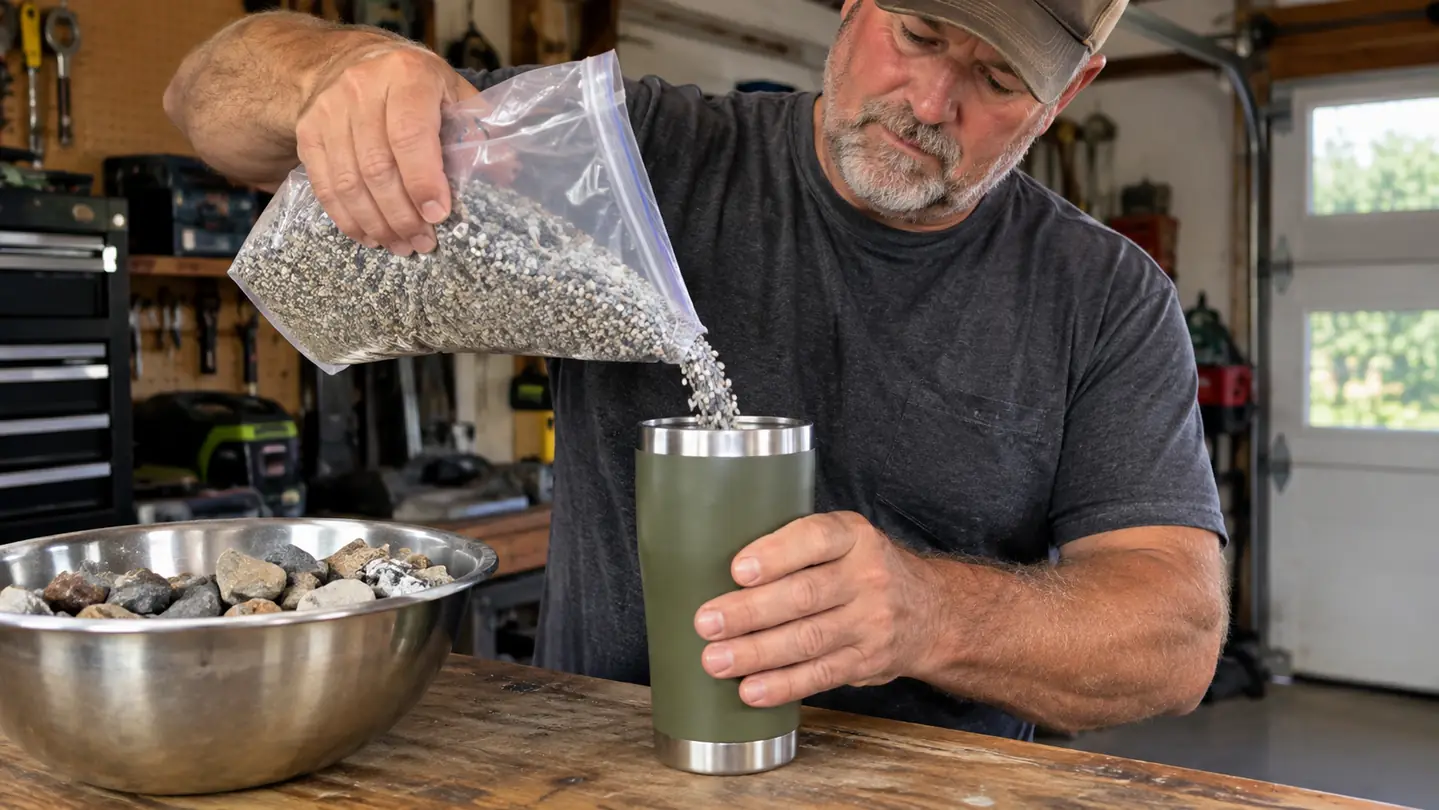
Polly Plastics wins on price, and I am not going to pretend otherwise. If you run several barrels at once, or you are tumbling for a school group or a scout troop, the lower cost per batch adds up fast. The grit does the job. It grinds, it smooths, and it polishes. I have pulled perfectly presentable stones out of a Polly Plastics batch, especially when I took the time to sift the grit before using it and kept my own notes on which bag was which. Last spring I ran a batch of river gravel for a neighbor's grandson, who was doing a science project on erosion. I used the Polly Plastics kit because the boy's mom was paying for the supplies, and the stones came out smooth enough that the kid was genuinely proud of them. The coarse stage cut well, the medium did its job, and the polish brought up a decent shine. Nothing about that batch embarrassed the brand. It just took more attention from me: I sifted the medium grit through a fine screen before the second stage, and I kept a notebook page for the batch so I would not grab the wrong bag when the time came. The extra minutes are not a big deal on one batch. The problem is that you have to do it every single time, because the next bag may not match the last one. On the same batch of river gravel, the medium grit cut noticeably faster than the previous bag, so I pulled the barrel a day early to keep the stones from grinding down into slivers. That is the kind of adjustment that keeps you at the bench instead of letting the tumbler run on its own.
The tradeoff is the extra attention it demands. You need to check the bags, sometimes re-sort the grit, and adjust your tumbling time when a batch runs coarser or finer than the last one. That is fine if you enjoy tinkering. I enjoy tinkering. But I also like walking away from a running barrel and knowing it will come out right. For that, I pay the difference and buy Blue Marble. I will give you one concrete example. Last November I ran two batches of the same stones, same size, same water, same number of days, one with each brand. The Blue Marble batch came out of the barrel with a consistent, even surface across every stone. The Polly Plastics batch had two stones that were still rough on one face, as if the fine grit had not reached them evenly. I re-ran those two stones for two more days and they came out fine, but the point stands: with Polly Plastics, I am the one who has to catch the problem. With Blue Marble, the kit catches it for me. When you tumble as many batches as I do in a year, that difference is the difference between a hobby and a second job. Between the garage, the garden, and the washes where I pick up stones, I have plenty to do without babysitting a barrel. I would rather spend my bench time sorting rough rock than sorting grit.
Get the grit kit that makes every stage predictable
If you want consistent coarse, medium, fine, and polish stages without re-sorting bags, the Blue Marble National Geographic Rock Tumbler Grit and Polish Refill Kit is the one I keep coming back to.
Amazon Check Today's Price on Amazon →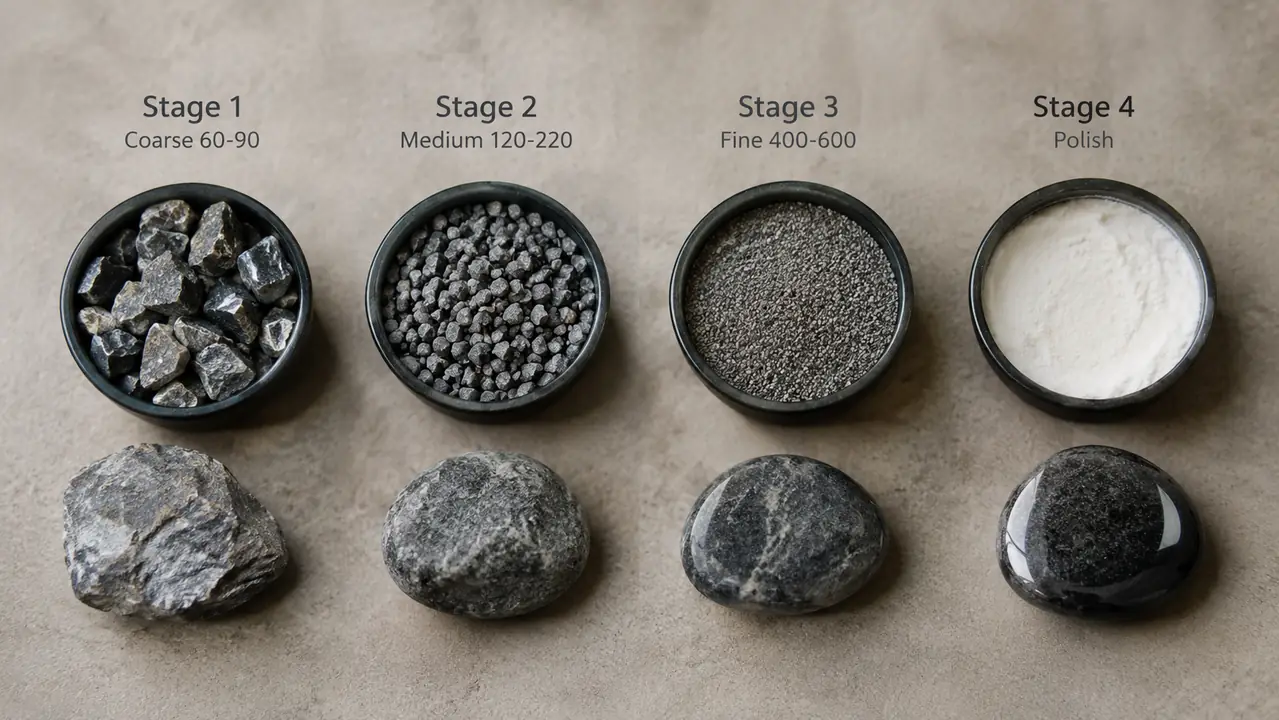
Who Should Buy Which
Buy the Blue Marble National Geographic kit if you want a refill that behaves the same way every time, if you are new to tumbling and want clear labels, or if you only run one or two barrels at a time. The consistency saves you from the most common beginner mistake, which is mixing up stages and grinding a batch that should have been polishing. I made that exact mistake in my first year of tumbling, when I ran a batch of stones through the polish stage without cleaning the barrel first, so fine grit from the previous stage scratched the polish right off. The stones came out hazy, and I had to start the whole batch over from the coarse stage. It took me three weeks to fix a mistake that clear labels would have prevented in ten seconds. If you are new to this, that is the argument for Blue Marble in one sentence: the kit is designed so you do not have to think about which stage is which. I would also point out that the kit comes with enough grit for several full batches, so the higher price per batch is spread across more than one run. When I started out, I bought a cheap single-stage grit and wondered why my stones never got shiny. The answer was that I was skipping the stages that do the real work. The Blue Marble kit walks you through all four, and the instructions match the bags, which is more than I can say for some kits I have tried.
Buy Polly Plastics if your budget is tight, if you are running many barrels at once, or if you genuinely enjoy measuring and sorting grit as part of the hobby. There is nothing wrong with the grit itself. It just asks more from you. For my money, and for the stones I pick up in the desert washes around Tucson, Blue Marble gives me the better shine with less fuss. I will say one thing for Polly Plastics: it is the kit I would hand to a school group or a scout troop, because the lower cost per batch means the kids can experiment without worrying about wasting expensive grit. Tumbling is a hobby where you learn by making a mess, and a cheaper grit set makes the mess easier to afford. I still keep a bag of Polly Plastics coarse grit on my shelf for the first stage of rough batches, because that is where the grit does the heaviest work and consistency matters the least. For the stages that show, the medium, the fine, and the polish, I use Blue Marble. That combination has given me the best results of anything I have tried, and after twelve years, I have tried most of what is out there.
Start your next batch with grit you can trust
The Blue Marble National Geographic Rock Tumbler Grit and Polish Refill Kit is the kit I recommend to anyone who wants consistent stages and a good polish without the guesswork.
Amazon Check Today's Price on Amazon →