
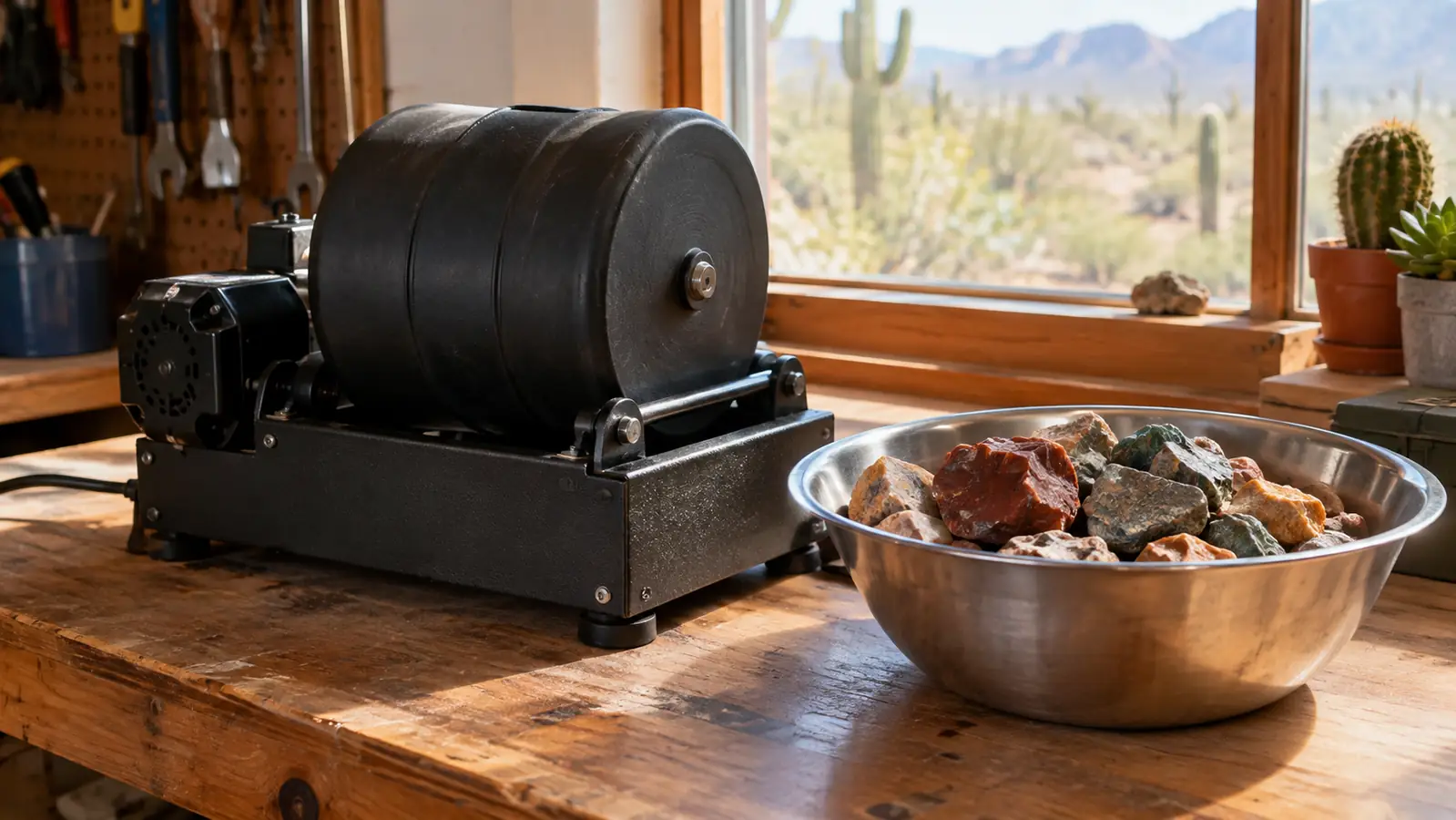
If you are new to rock tumbling, the first question is always the same: what do I put in the barrel? You can buy single types of rough stone, but I have found over twelve years of running barrels in my Tucson garage that a rough stone mix is the better place to start. My first barrel, back in 2013, was a bag of single-type agate I bought on a whim, and I nearly quit the hobby because I had no idea how to handle it. The UFEEL 3 LB Bulk Rough Stone Mix gives you a handful of different materials in one bag, which solves the beginner problem before it starts. You learn what each stone does, you learn what your tumbler does, and you do not have to guess which single stone to commit to.
I have ruined my share of batches. I have run agate too long and turned it into gravel. I have mixed stones that wore each other down into mud. One batch of soft sandstone and quartz I pulled from a desert wash near Florence came out looking like wet sand after three weeks in the barrel. A mix like this one from UFEEL avoids most of that because the stones are already chosen to work together, and the pieces are big enough that you can see what is happening instead of guessing. Here are the ten reasons I tell people to start here.
Start with a mix that is ready to run
The UFEEL rough stone mix is a practical first barrel for anyone learning to tumble. Check today's price on Amazon and see what is in the bag.
Amazon Check Today's Price on Amazon →You learn to identify stones by feel
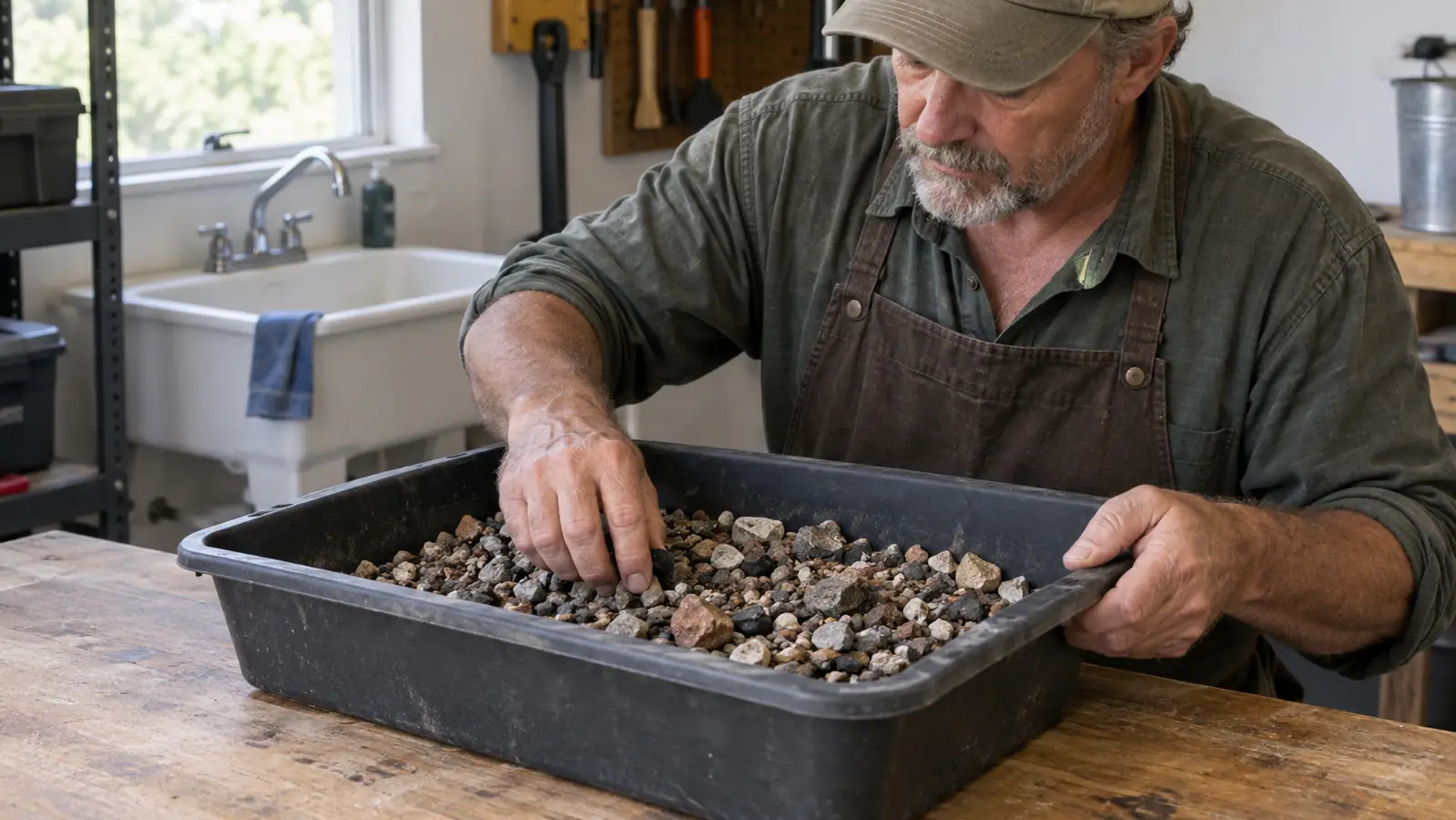
A mix forces you to look at each piece. Is it smooth or rough? Heavy or light? That is the whole skill of tumbling, and you build it in the first week. I still remember the first time I sorted a bag like this on my workbench: I lined up each stone and wrote down what I thought it was, then checked my list against a basic identification chart. I got about half right. By the third batch I could name most of them before the chart came out. With a single-type bag you never develop that eye, because every piece already looks the same.
Different hardnesses teach you to sort
Some stones in the mix are harder than others. That is a feature, not a problem. You learn to sort by hardness before you run a batch, which is the single most useful habit in this hobby. The test I teach: if a piece scratches window glass, it is hard enough for the coarse grit. If it does not, set it aside or skip it entirely. I ruined a whole batch of soft calcite my second year because I skipped that test. You will not make that mistake if you learn the test on day one.
You see color and pattern variety immediately
A single-type bag gives you one look. A mix gives you quartz, jasper, and other materials in the same barrel, so you see what each one does after the first run. That feedback is gold for a beginner. When I ran my first mix, the jasper pieces came out glossy while the quartz stayed cloudy, and that one barrel taught me more about grit progression than any book I have read. You get the same lesson in your first week instead of your first year.
The 3-pound size is enough for a first barrel
Three pounds fills a small barrel without overcommitting. You can run it, learn, and then decide what to buy next. You are not stuck with five pounds of a stone you do not like. For a standard 3-pound barrel, a 3-pound bag is about the right load once you add grit and water. I have seen beginners buy ten-pound bags of a single material, run it once, and let it sit in a bucket for years. A small bag keeps the stakes low while you figure out whether you even enjoy the hobby.
You practice the full cycle without a big investment
The whole point of a starter is to learn the four-step cycle: coarse, medium, fine, polish. A mix lets you practice that cycle on material that is cheap enough to experiment with. Each step runs about a week in my barrels, sometimes ten days if the stones are rough, so your first full cycle takes about a month. By the end you know exactly how each stage changes the stone. If you make a mistake, you are out a little rough material, not a rare stone you saved up for.
You learn to match barrel load to stone size
The mix has pieces around an inch, which is a good size for a standard barrel. You learn how full the barrel should be, and that lesson carries to every batch after. The rule I use: the barrel should be about three quarters full of stone, with the rest taken up by water and grit. Too full and nothing moves. Too empty and the stones just bang into each other. Inch-sized pieces make it easy to see and correct the load level, because you can count them.
You get honest practice with grit and polish
Every stone in the mix will respond a little differently to the same grit. That is the best possible education. You see which stones take a shine and which ones stay matte. I keep a notebook for every batch, with the date, the grit, and how long each step ran. After a few mixes you will have a page of notes that tells you more than any tumbling guide. The stones that stay matte are not failures. They are telling you they need more time in the fine step, or they are too soft to polish. Either way, you learned something.
You can run it while you learn the machine
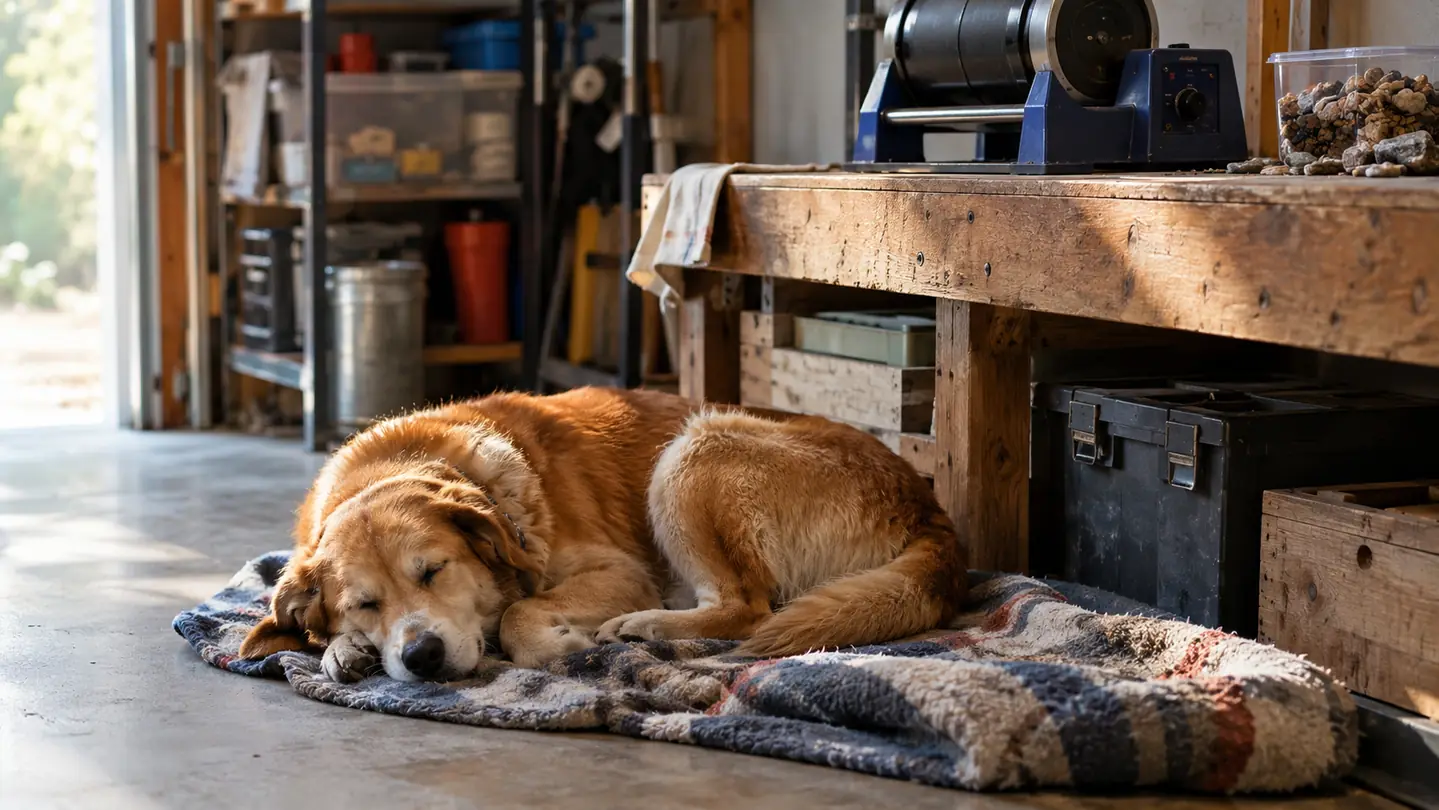
A tumbler makes noise, and my dog Biscuit hates loud rattling. I run the barrel on a folded towel in the garage and check it daily. A mix is forgiving enough that you can learn the machine's rhythm without ruining the batch. I learned the towel trick the hard way: my first tumbler sat directly on the workbench, and the vibration walked it six inches across the bench in one night. Biscuit hid under the garden bench for two days. Now the barrel sits on a folded bath towel, and the rattle drops to a low hum that does not bother Biscuit at all.
You build a stash of finished stones fast
After a few runs you have a bowl of polished stones you actually made. That is the reward that keeps people in the hobby. A mix gives you variety in that bowl, which makes it more fun to show off. My wife Carol keeps a small bowl of my early pieces on the kitchen windowsill, mostly the ones that did not come out perfect, and she will not let me replace them with better ones. Every time I look at that bowl I remember the batch it came from. You will want that kind of record of your first year.
You learn what to look for at the gem show
I walk the Tucson gem show every winter. Knowing what a rough mix looks like, and how different stones behave in the barrel, makes the show a hundred times more interesting. You start with a mix, and you end up knowing exactly what to buy in bulk. Last winter I watched a young couple pick up a bag of mixed rough, put it down, and walk away because they were not sure it was worth the money. I told them what I am telling you: a mix is how you learn. They walked out with the bag.
What I'd Skip
If you already know you only want one material, say you only want agate, then a mix is not for you. Buy the single type and save the sorting. And if you are the kind of person who wants everything perfect on the first run, a mix will frustrate you, because some pieces will come out better than others. That is normal. The mix is a learning tool, not a promise of perfection. I also would not hand a mix to someone who expects a finished product this weekend. Tumbling is measured in weeks, not days. If you are not ready for a month-long cycle, start with already-polished stones and save the rough mix until you have the patience for it.
A mix is a learning tool, not a promise of perfection. You learn more from the pieces that come out matte than from the ones that shine.
Give yourself a fair first run
The UFEEL rough stone mix is the kind of starter I wish I had used. Check today's price on Amazon and fill your first barrel.
Amazon Check Today's Price on Amazon →