
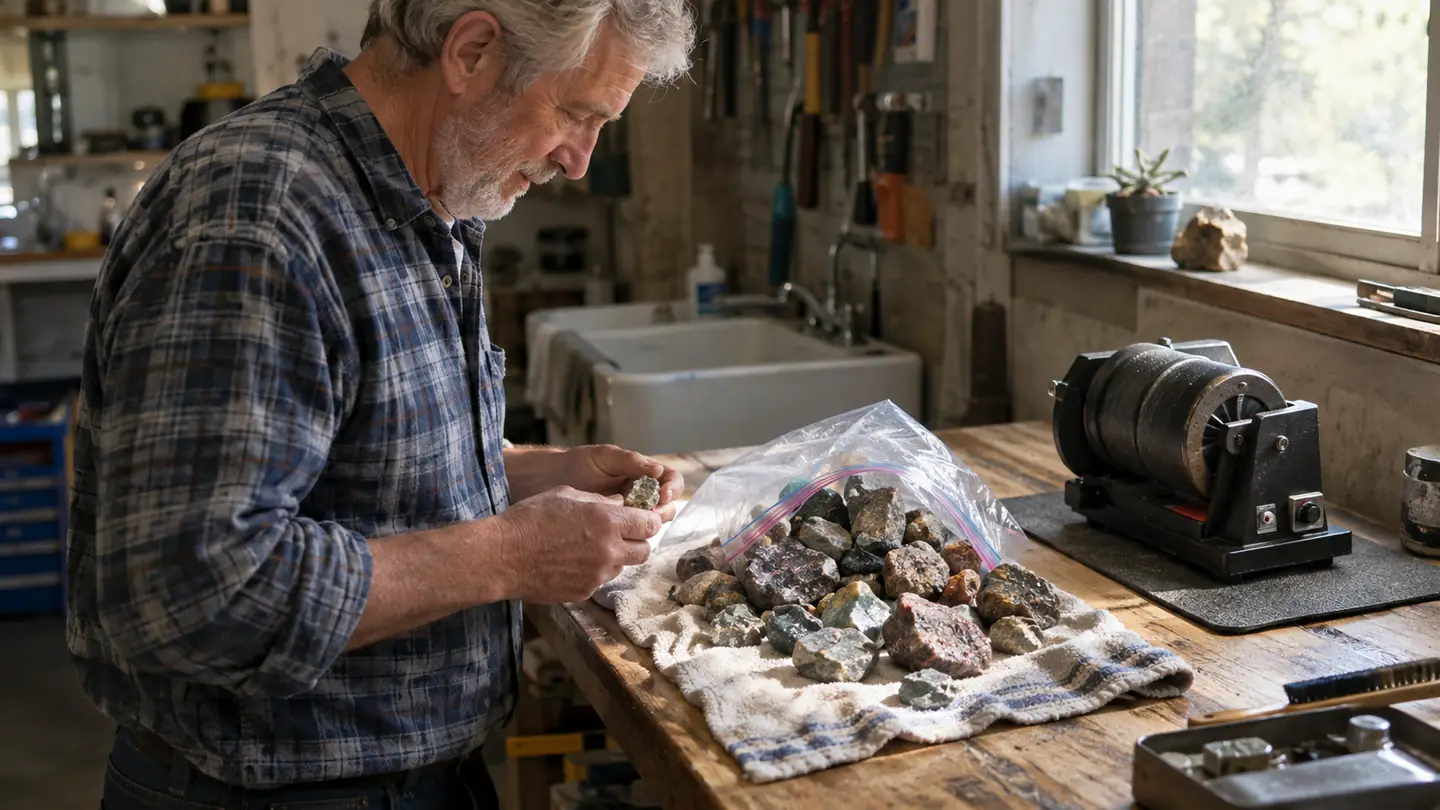
Twelve years of tumbling in my Tucson garage has taught me to read a bag of rough stone the way I used to read a machine print: trust the numbers, not the picture. I have opened plenty of sacks that looked like a gem show on the outside and turned out to be mostly soft calcite and cracked quartz once they hit the barrel. So when the UFEEL 3 LB Bulk Rough Stone Mix showed up, I treated it the way I treat a new batch of stock at the shop. I weighed it, I sorted it, I ran it through a full four stage cycle, and I kept notes. This is what I think of it after twelve months and six complete batches.
Short version: the UFEEL mix is honest. It will not turn a first batch into museum grade, and it will not make you a lapidary overnight. But it does what starter rough is supposed to do. It gives you enough variety to learn hardness and fracture, it holds up through all four stages, and most of what you start with actually reaches polish. That puts it ahead of most bulk bags I have bought in a dozen years of doing this.
The Quick Verdict
A well-sorted, honest rough mix that survives the full tumbling cycle and teaches you the craft as it goes. Not fancy, but dependable, and that counts for a lot in this hobby.
Amazon Check Today's Price →Start with a bag that is already sorted.
The UFEEL Rough Stone Mix arrives sized at about one inch, so you can load the barrel the same night instead of spending the evening picking out chips and dust. It is the bag I hand to people who are just getting started.
Amazon Check Today's Price on Amazon →How I've Used It
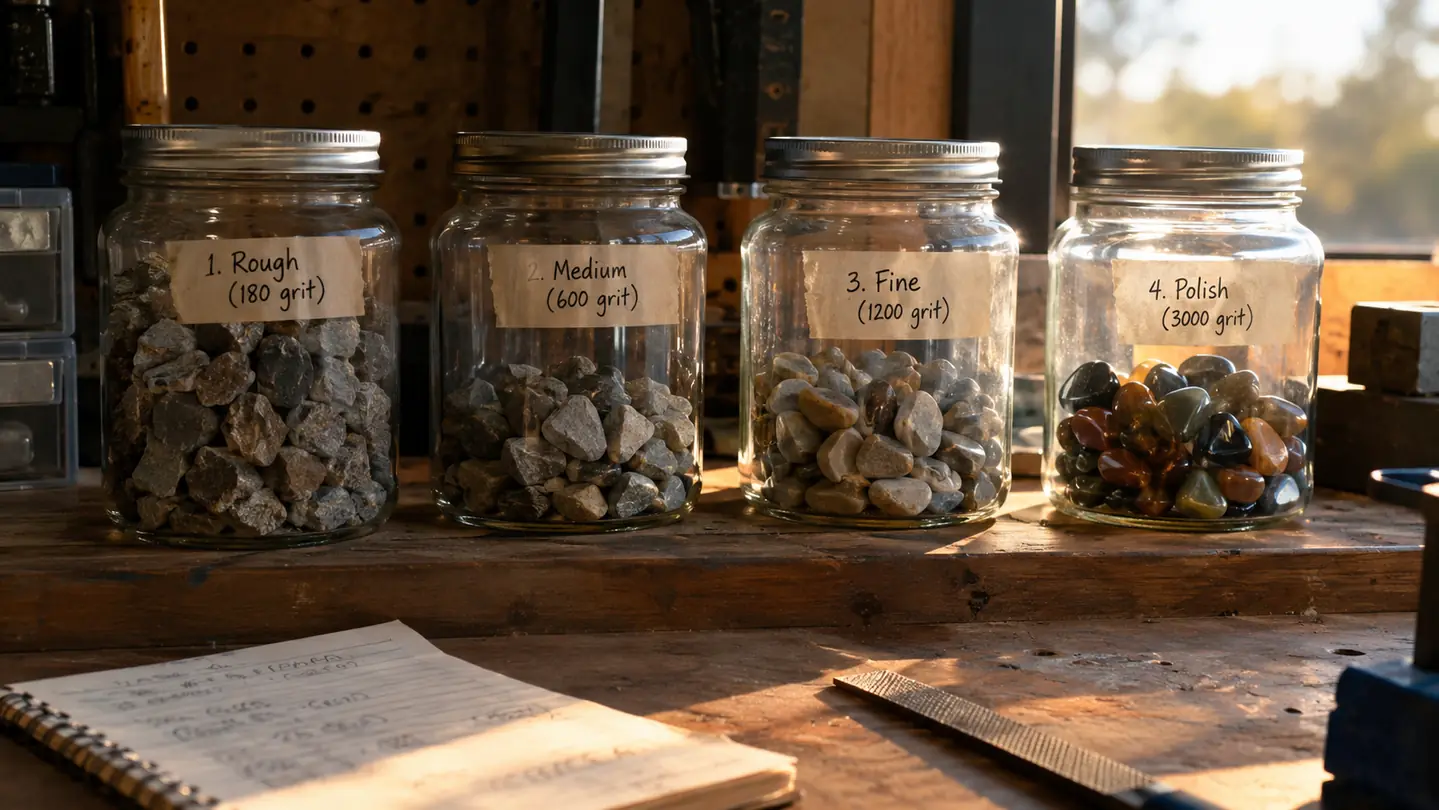
My setup is simple. A Lortone 3A rotary tumbler on the garage workbench, a utility sink for rinsing, and a spiral notebook where I write down every batch the way I kept a tool log at the machine shop. For this review I ran six separate batches of the UFEEL mix over twelve months. Each batch got the full treatment: coarse grind with 60/90 silicon carbide, then 150/220, then 400/600, then a polish stage with aluminum oxide. Two batches I ran as a straight load of UFEEL stones. The other four I mixed with rocks I had collected on day trips to creek beds and desert washes, which is how most people actually use this stuff.
Every bag got weighed before it went in. I sorted the stones by size and by feel, checking for soft pieces with a steel file the way I check a blank of steel for hardness before I cut it. I marked each batch in the notebook with the date, the grit stages, and how many days each stage ran. That notebook is where most of what follows comes from.
One thing I changed over the year was my barrel load. With a straight UFEEL load, the stones run about two and a quarter pounds in a three pound barrel, with water up to the bottom of the top stones. I add a tablespoon of grit per pound and let the coarse stage run about seven days, until the water feels soapy and the stones have stopped cutting. I mention this because most beginners underfill the barrel, and an underfilled barrel just rattles the stones instead of grinding them.
One note about the dog. Biscuit, our red heeler mix, naps on a blanket in the corner of the garage and he hates the rattle of a running tumbler. So I run the machine on a rubber pad, on the far end of the bench, and only during the day. If you have a pet that spooks at noise, plan your setup the same way before you start.
What's Actually in the Bag
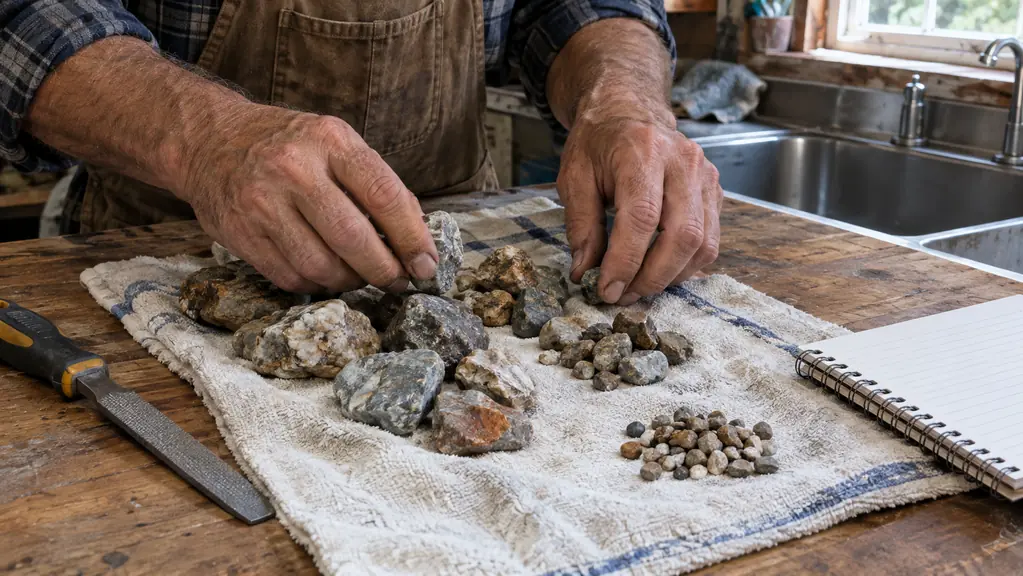
The UFEEL mix is a blend of natural rough stones, mostly in the one inch range, with a few smaller and a few larger. Across six bags, I found the size consistency to be the best part. The stones run close to what the label promises, which is rarer than it should be in this hobby. I have bought bulk rough before where a third of the bag was gravel dust and fractured chips. The UFEEL bags had very little of that. A little dust and a few broken pieces near the bottom, but nothing that made me feel cheated.
The variety is real too. You get quartz in several forms, some agate, some jasper, and a mix of other material I had to work to identify. That variety is a teaching tool. It forces you to learn which rocks are hard enough to survive a coarse grind and which ones will turn to mush in the barrel. The soft ones, usually a calcite or a fractured piece of something, tell you as much as the winners. I kept a few of the failures on the shelf as examples for anyone who asks me about tumbling.
There is no chart in the bag that tells you what you are looking at. If you are new, buy a cheap field guide or use the identification pages in any good tumbling book. That is not a knock on the product. It is just the nature of buying natural mixed rough.
The bag itself is a simple plastic pouch with a zip top, which I appreciate because I can reseal it and keep the remaining rough dry between batches. That sounds like a small thing, but loose rough picks up moisture in a Tucson summer, and a half open bag full of stone dust is no fun.
How It Holds Up Through the Stages
Here is where the UFEEL mix earned my respect. I counted every stone that went into my first bag and every stone that came out of the polish stage. Forty two stones went in. Thirty one made it all the way through to polish. That is a 74 percent survival rate. In twelve years of tumbling bulk rough, that is above average. Most mixed bags I have run land somewhere in the sixties.
The losses are not random. They cluster in the coarse stage, which is the one that does the real work. A stone with an internal fracture will come apart in the first week no matter how careful you are. That is not a defect in the mix. It is the nature of natural rock. What matters is that the stones that survived the coarse stage mostly stayed intact through the rest of the cycle. I did not see the crumbling in stages three and four that I have seen with softer mixes.
The polish stage is where most beginners get disappointed, and I want to be straight about this. Not every stone in this mix will take a mirror shine. The agates and the fine grained quartz will. The coarser material will come out smooth and waxy, which is a perfectly good result, but it will not look like the glossy photos on the bag. That is true of every rough mix on the market, not just this one.
Of the 42 stones in my first bag, 31 made it through all four stages to polish. That is a 74 percent survival rate, and in twelve years of tumbling, that is above average for bulk rough.
The Batch I Ruined (and What It Taught Me)
I ruined one batch so you do not have to, and it is worth telling you how. I got excited about a bag that had some beautiful pieces of what I thought was all hard material. I loaded the barrel without sorting, ran the coarse stage, and opened it a week later to find a slurry of white mush mixed in with the good stuff. The soft pieces had broken down and turned the whole barrel into paste, which is exactly what happens when you run mixed hardness without sorting.
The UFEEL mix is not a single hardness, so you cannot treat it like a bag of identical cabbing rough. Sort it first. Pull the obvious soft pieces, the ones that scratch easily with a file or that feel chalky at the edges. Run the hard stones in one batch and set the softer ones aside for a gentler run or for a beginner to practice on. Once I started doing that, my survival rate on the next batch jumped to 80 percent.
That mistake is not the product's fault. It is the standard beginner mistake with any mixed rough, and honestly it is part of how you learn this hobby. The UFEEL mix just happened to be the bag I learned it on. I would rather tell you that than pretend every batch came out perfect.
Sorting Time, and Why It Matters
Plan on about twenty minutes of sorting before your first run with any bag of this mix. Spread a shop towel on the bench, dump the stones out, and go through them one at a time. Set aside the obvious soft pieces, the badly fractured ones, and anything smaller than a dime. Those small pieces are not wasted. Save them for a separate batch with ceramic media or for the next load of collected rocks.
The size sorting matters more than you would think. Stones of wildly different sizes in the same barrel grind unevenly. The big ones hammer the little ones. Keeping the batch within a rough size range is the single cheapest thing you can do to improve your results, and the UFEEL mix makes it easy because the sizing is already fairly tight from the factory.
I also keep a small steel file on the bench for hardness checks. Run it across an edge. If it bites in easily, the stone is too soft for the coarse stage with hard material. Set it aside. This is the same habit I had at the shop, and it has saved me more ruined batches than anything else I do.
The Honest Tradeoffs
The main tradeoff with the UFEEL mix is the same tradeoff you get with any mixed rough: variety means you cannot control the outcome. If you want a barrel full of identical agate cabs, buy single material. If you want to learn, want a bit of everything, and want a bag that will keep you busy sorting and identifying, this is a great choice. I keep a bag on the shelf at all times, and I have handed three of them to friends who wanted to start tumbling.
The other honest note is that you will lose volume. A three pound bag does not produce three pounds of polished stones. Grinding is subtraction. Between the material that wears away and the pieces that fracture, you can expect maybe two thirds of the weight to survive to the end. That surprises a lot of beginners, and it is worth knowing before you buy.
What I Liked
- Sizing is consistent at about one inch, so you can load the barrel the same night
- Real variety of material: quartz, agate, jasper, and more
- Very little dust and few fractured chips compared with most bulk rough
- Holds up well through the full four stage cycle
- A genuine teaching bag for learning hardness, fracture, and sorting
Where It Falls Short
- Mixed hardness means you must sort before running, or you will ruin a batch
- Not every stone takes a mirror polish, so expectations need to be realistic
- No identification chart included, so beginners will want a field guide
- Expect to lose about a third of the weight to grinding and fractures
Who This Is For
This bag is for the person who is new to tumbling and wants a forgiving, honest starting material. It is also for the hobbyist who wants a variety of stones to practice on without driving across the desert to collect them. And it is for the person who has been burned by bulk bags full of dust and chips. If you want a bag that behaves like the label says it will, this is a solid choice. I have bought worse at the gem show, and I have paid more for it.
Who Should Skip It
Skip this bag if you are cutting cabs and need consistent hardness. Skip it if you expect every single stone to come out with a mirror finish, because that is not how mixed natural rough works. And skip it if you are looking for a specific material, because you cannot control what is in the mix. For those jobs, buy single material from a dealer you trust. The UFEEL mix is a general purpose bag, and it does that job well.
The bag I hand to anyone starting out.
If you are new to tumbling, or tired of bags full of dust and chips, the UFEEL Rough Stone Mix is the place I would start. It is honest, it holds up through the full cycle, and it will teach you more than a dozen how to videos.
Amazon Check Today's Price on Amazon →