
Every rock tumbling book tells you to start with a good rough stone mix. What the books do not tell you is that the bag arrives looking like a box of chocolates where every piece could be caramel or a mud pie. I have been sorting rough stones on this garage bench for about twelve years, and I still ruin a batch now and then. The UFEEL 3 LB bulk rough stone mix is a decent starting point, but only if you sort it before it ever touches grit. That sorting is the whole job. Here is the method I use, step by step. The whole job takes about twenty minutes once you know the moves, and it saves you a month of waiting on a bad batch.
The mistake beginners make is treating the whole bag as one batch. It is not one batch. A bulk mix is a pile of different minerals that happen to be about the same size. Tumble them together and the softer pieces grind away while the harder pieces stay rough, cracked pieces break apart, and you end up with a barrel of gray gravel. That was my first batch, by the way, back when I thought more rocks meant more results. I learned to pick them one at a time, and this guide is that lesson written down.
Start With Rough Stones That Won't Ruin Each Other
The UFEEL 3 LB bulk rough stone mix gives you a solid pile of 1 inch stones to sort through. Most of them are worth tumbling, and the whole sorting job takes about twenty minutes once you know what to look for.
Amazon Check Today's Price on Amazon →Step 1: Set Up a Sorting Station Before You Open the Bag
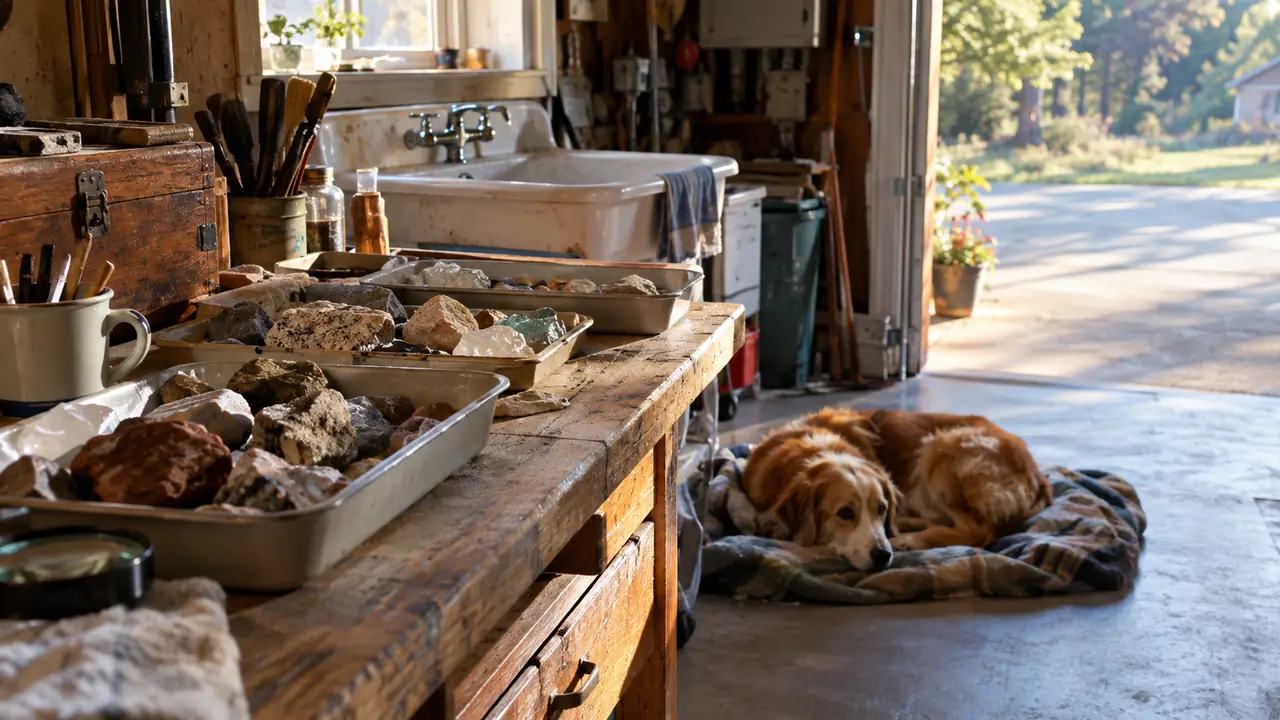
The garage workbench has a utility sink, and that matters more than you think. Wet stones show cracks that dry stones hide, and every crack is a reason to pull a stone. I put down an old towel, fill a shallow pan with water, and set a second dry towel next to it. That is the whole station. Good light helps, so I open the garage door and work in the morning light. The sorting takes twenty minutes, so it is worth doing somewhere you can actually see what you are looking at.
Biscuit, our red heeler mix, naps on his blanket in the corner, and he stays there because he hates loud rattling noises. The tumbler runs at the far end of the bench for that reason. Sorting is quiet, so the dog is fine with this step. Just know where the tumbler is going before you load it, because moving a running tumbler is how you spill a barrel of wet grit on your boots.
Empty the bag onto the dry towel and spread the stones out in a single layer. You are looking at roughly forty to fifty stones in the 3 pound mix, depending on how the sizes land. Do not judge them yet. Just get them spread out where you can see every one. A single layer matters because you are about to look at each stone individually, and buried stones get skipped.
Step 2: Sort by Hardness Before Anything Else
Hardness is the rule that decides everything else. Tumble a soft stone with a hard one and the soft one disappears. The UFEEL mix is mostly quartz family material, agates, jasper, that kind of thing, which sits around 7 on the Mohs scale. That is the good news. The mix is reasonably consistent, so a lot of the sorting is already done for you. Still, consistent does not mean perfect, and a bulk bag always has a few strays.
Check every stone anyway. A steel pocketknife blade will not scratch quartz, but it will scratch calcite and some of the softer material that finds its way into bulk bags. If the knife leaves a mark, that stone goes in the garden pile, not the tumbler. I keep a separate tray for the rejects. My wife Carol has a flower bed that has absorbed twelve years of my bad judgment, and the garden path is paved with stones I was too hopeful about.
The scratch test takes seconds. Lay the stone flat, drag the blade across a corner you do not care about, and look for a white line. If you see one, set it aside. When you have gone through the whole pile, you should have two trays: tumbling stones and garden stones. Do not skip this. It is the difference between a barrel of polish and a barrel of grit.
Step 3: Reject Anything With a Crack Running Through It
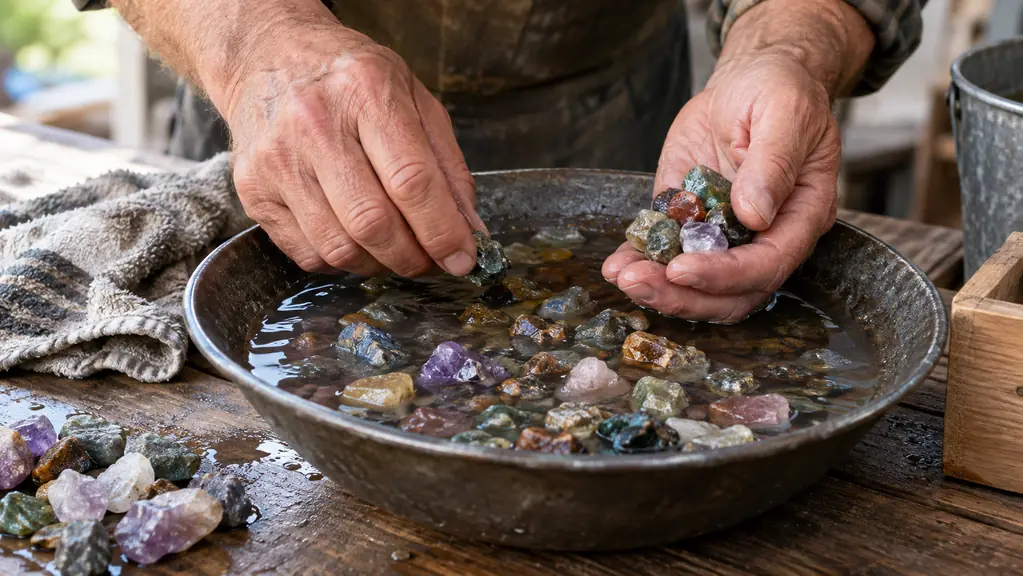
Now wet the survivors. Drop each stone in the pan of water and hold it up to the light. A crack that is invisible on a dry stone shows up as a dark line when the stone is wet. That is the fastest trick in the hobby, and it is the one I use on every single stone. Water is cheap. A ruined batch is not.
You might think a small crack is fine, that the tumbler will smooth it over. It will not. The grit gets into the crack and grinds from the inside. I ran a batch with a few cracked stones once, thinking I was being wasteful by pulling them. The grit turned the inside of the crack into a slurry, and the stones came out looking like they had been chewed. I do not do that anymore.
There is also the tap test. Hold a stone between two fingers and tap it with a small hammer handle or the back of a spoon. A solid stone rings a little. A cracked stone thuds. It takes practice, but after a few batches you will know the difference by ear. When in doubt, pull the stone. The other reason to be strict is that one cracked stone sheds fragments into the whole barrel, and those fragments act like extra grit that scratches everything else. A 3 pound bag has enough good material that you can afford to be picky.
Step 4: Match the Size and Shape to Your Barrel
The UFEEL mix is labeled as 1 inch stones, which suits a standard 3 pound tumbler barrel. The rule of thumb is that all the stones in one load should be close to the same size. Mix a 1 inch stone with a half inch stone and the small one rides in the gaps, never gets tumbled properly, and the big one hammers it all week. If your tumbler takes a smaller barrel, sort accordingly, and save the big stones for the next batch. Matching the load to the barrel is not a suggestion, it is the whole game.
I sort for shape too, not just size. Round stones and flat stones do not mix well. Flat stones slide instead of tumbling, and they can stall the barrel. I pull the flat ones and save them for a batch with other flat ones, or I leave them in the garden pile. What you want in the barrel is a load of roughly equal, roughly rounded stones that can roll over each other. That rolling motion is what does the polishing.
Fill the barrel about two thirds full of stones, no more. That leaves room for the stones to actually move. A full barrel just grinds in place, and a half full barrel lets the stones hammer each other until the edges chip. Two thirds is the number I have landed on after a lot of trial and error, and it has never let me down. If the load looks too small after sorting, run a smaller batch rather than adding stones that do not belong.
Step 5: Wash Everything and Load the Barrel
Before anything goes in the barrel, wash it. The rough stones carry dust, grit, and loose fragments from the bag, and that debris turns into mud in the first cycle. I rinse each stone under the utility sink tap, scrub the stubborn ones with an old toothbrush, and lay them out on the clean towel to dry. Twenty minutes of washing saves you a week of murky slurry.
Then load the barrel in the right order. Stones first, then water until it just covers them, then the coarse grit. The standard starting amount is two tablespoons of coarse grit per pound of stones, so a 3 pound load gets six tablespoons. I measure it every time. Guessing at grit is how you get a barrel of rounded pebbles with no polish, and I have a jar of those pebbles to prove it. Measure the water the same way. Just covering the stones is the mark.
Run the coarse stage for about seven days, then check the stones. This is where the UFEEL mix earns its keep, because the material is consistently hard enough to hold a polish. Rinse everything, repeat with fine grit, then pre-polish, then polish, and finish with a burnishing cycle using a little dish soap to knock off the grit residue. That last step is the one most people skip, and it is the one that makes the surface actually shine. I also peek at the load midweek by rinsing one stone to see how the edges are rounding. That one stone tells you whether to run the stage longer or move on.
What Else Helps
Keep notes. I keep a spiral notebook on the workbench and write down every batch: what went in, how many days each stage ran, what the stones looked like when they came out. Twelve years of notes means I can look up exactly what worked with this material and what did not. The notes also tell me which bags of rough stone are worth buying again. The UFEEL 3 pound mix has earned a repeat spot, mostly because the size is consistent enough that my notes from one batch carry over to the next.
Label your grit jars and keep them separate. Coarse grit in one, fine in another, and never dip a wet spoon into the wrong jar, because one grain of coarse grit in the polish stage will scratch the whole batch. I keep a separate spoon for each jar. It sounds fussy. It is fussy. It is also the reason my last four batches came out glossy instead of dull.
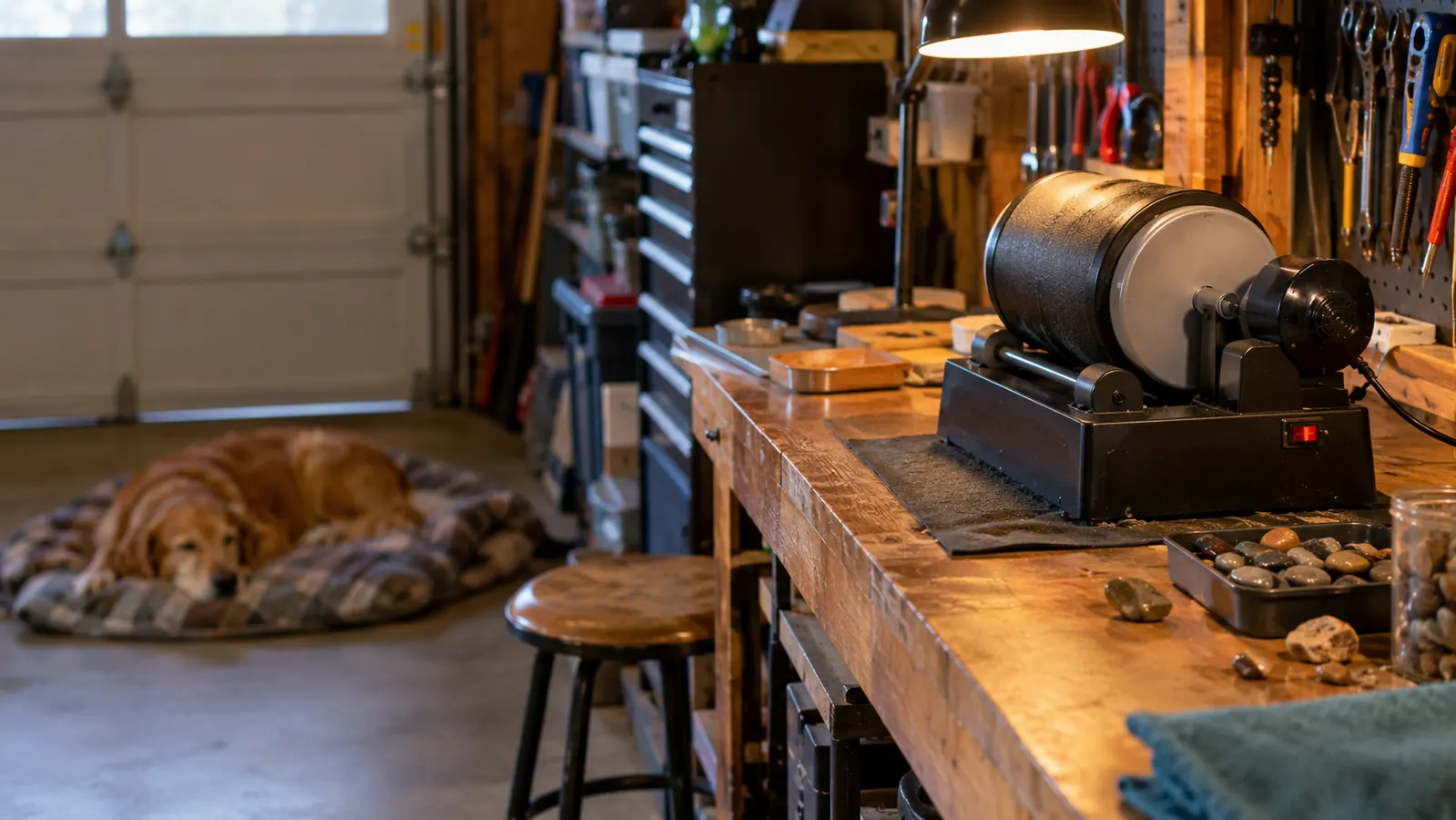
Give the barrel a good spot. Mine sits on the far end of the garage bench, away from Biscuit's blanket, because the rattling bothers him. The vibration also loosens lids, so I check the lid every morning. A loose lid on a running tumbler is a garage floor full of slurry, and I have mopped that floor enough times to be religious about the lid check.
Two tablespoons of coarse grit per pound of stones, measured every time, is the difference between a barrel of polish and a barrel of gravel.
Picking rough stones comes down to three habits: check hardness, reject cracks, keep sizes close. Do those three things and the UFEEL mix will give you a tray of stones that polish up nicely. Skip them and you will learn the same lesson I did, the slow way, one gravel batch at a time. The sorting takes twenty minutes. The payoff is a barrel you are happy to open.
The Rough Stone Mix I Keep Coming Back To
For a bulk mix, the UFEEL 3 LB rough stone mix is consistent, hard, and big enough to sort by hand. That is exactly what you want when you are learning to pick stones like a machinist instead of a gambler.
Amazon Check Today's Price on Amazon →