
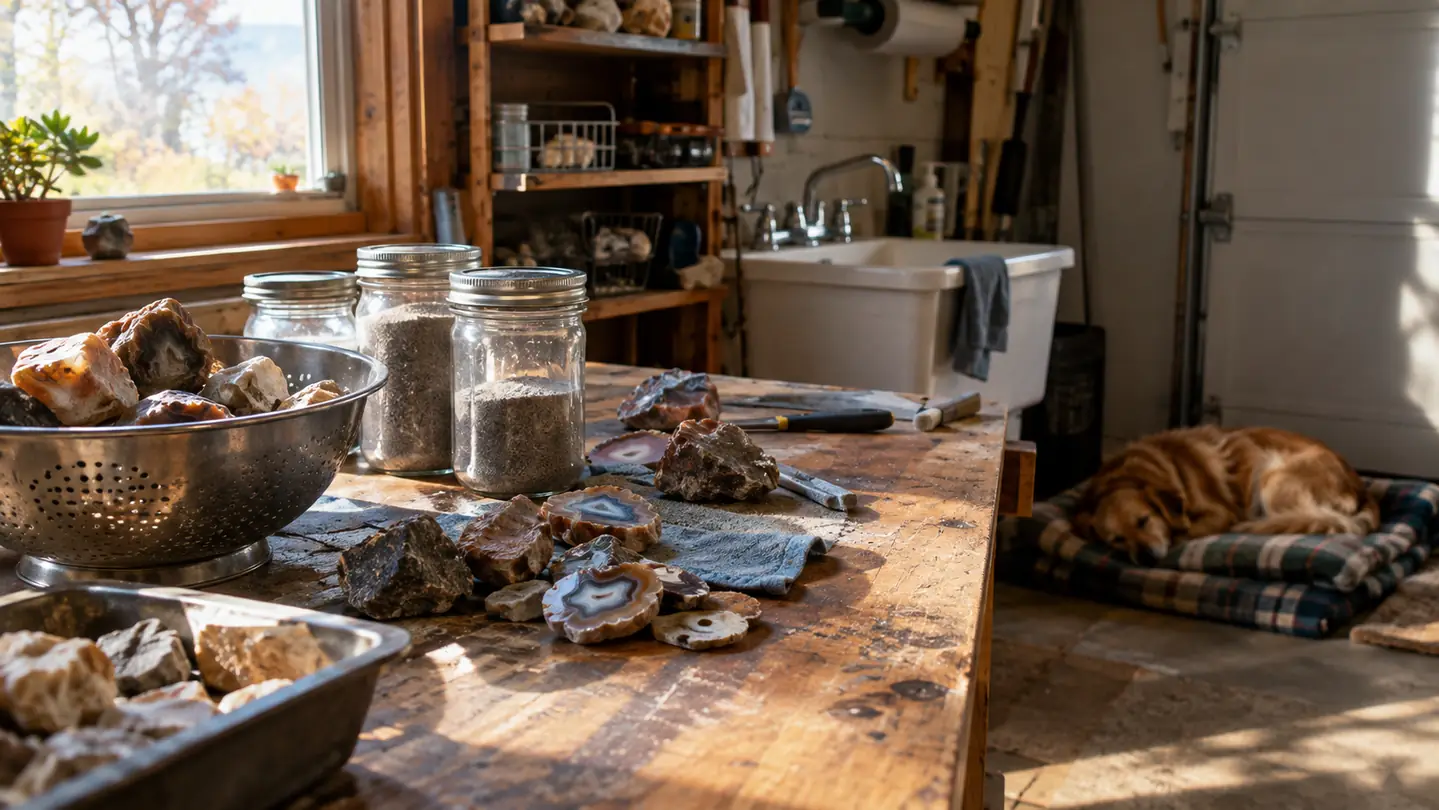
Agate is the most forgiving stone I tumble and the easiest one to ruin, and I have done both in the same week. I have run a rotary tumbler on a workbench in my Tucson garage for about twelve years now, and for the first year or two every batch of agate I pulled out looked like wet gravel. The problem was never the stone. It was my impatience. If you have a barrel full of dull gray agate sitting on your bench right now, this article is the one I wish someone had handed me before I wasted a good bag of rough. The routine below is the exact sequence I use today with the Dan&Darci rotary rock tumbler, and it works the same on any rotary machine.
Why agate fights you is simple: it is harder than most stones you will ever put in a barrel, around 6.5 to 7 on the Mohs scale, so every stage takes longer. If you rush the coarse grind, the surface never gets flat, and no amount of polish will fix a surface that is still covered in tiny pits. The second mistake is skipping the cleaning between stages, which drags coarse grit into the fine stages and scratches everything you just smoothed. Both mistakes are easy to make and easy to avoid. The five steps below cover the whole run: sort the rough, grind it flat, clean it thoroughly, work down through the grits, and polish it right.
Start With a Tumbler That Lets You Walk Away
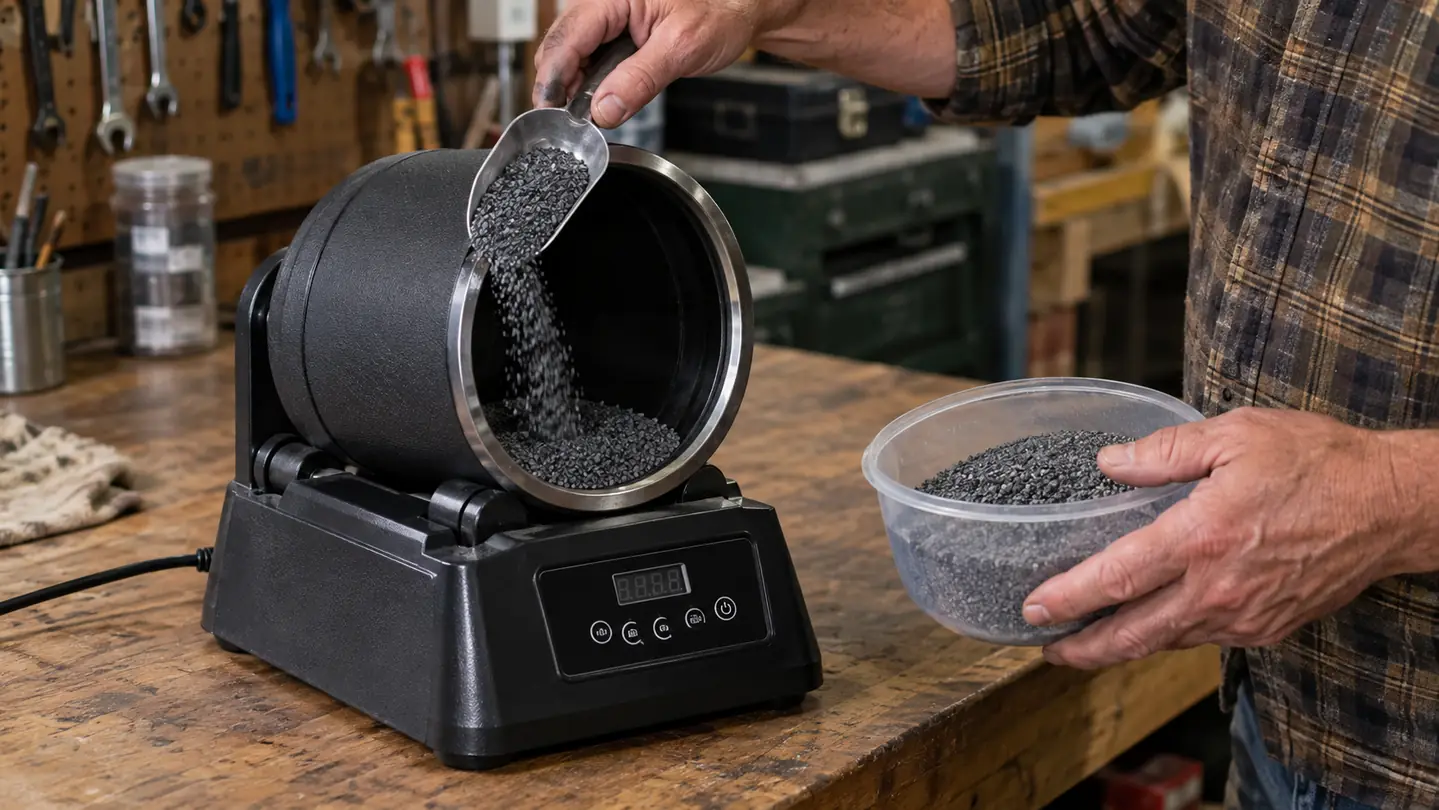
The Dan&Darci Advanced Professional Rock Tumbler Kit has a digital 9-day timer, which matters more than it sounds when your coarse grind runs eight days. The barrel shuts itself off when the cycle is done, so you are not standing over it. The kit also includes the grits and rough stones you need for the routine below. Check today's price on Amazon.
Amazon Check Today's Price on Amazon →Step 1: Sort Your Rough Before It Touches the Barrel
Walk your fingers over every piece of agate before it goes in the barrel. What you are looking for is cracks. A cracked stone will not polish, it will break, and the pieces will chip every other stone in the barrel for the next week. Hold each piece up to the light and look for hairlines. If you see one, set that stone aside for the garden, or tumble it long enough to grind the crack out before it joins a batch. Most of the time it is not worth the risk.
You also want stones of similar size in the same barrel. Agate is all about the same hardness, so that part takes care of itself, but size matters. A barrel with one giant stone and a dozen tiny ones will not grind evenly. The big stone takes all the abuse and the little ones rattle around and never touch the grit. I sort my rough into three groups: walnut sized, golf ball sized, and bigger. Each group gets its own batch. The Dan&Darci barrel holds a solid load of walnut sized agate at about two-thirds full, which is the fill level you are after.
Fill the barrel about two-thirds to three-quarters full. Too little and the stones slide past each other and do nothing. Too full and the slurry cannot move, so the grit never reaches the stones. Two-thirds is the sweet spot. If you need to top up a batch, add scrap agate or a few of the filler stones that come with the kit. What you do not want is a half empty barrel.
Step 2: Run the Coarse Grind Long Enough to Get It Flat
The coarse stage is where most agate batches get ruined, because it is boring and it takes forever. Agate is hard, so the coarse grind is not a weekend job. I run mine for seven to nine days with the 60/90 silicon carbide grit that comes with the Dan&Darci kit. The digital 9-day timer on this tumbler was made for exactly this job. Set it for eight days, put the lid on, and walk away. The barrel shuts itself off when the cycle is done.
How do you know the coarse stage is finished? You do not, not until you open the barrel and look. Rinse a few stones and check them in good light. The surface should be dull but smooth, with no sharp edges and no deep pits. If you can still see the original rough surface, the frosted patches and little craters, it needs another three or four days. That is normal. Agate does not care about your schedule.
One honest note about noise. A rotary tumbler with a full load of agate sounds like a dryer full of boots. Biscuit, our nine year old red heeler mix, hates it. He naps on his blanket in the garage, and the rattling drives him to the other end of the house. I set the tumbler at the far end of the workbench and sit a folded moving blanket under the barrel. It does not make it quiet, but it helps, and it keeps Carol from giving me that look across the dinner table.
Step 3: Clean the Rocks and the Barrel Between Every Stage
Here is the step everybody skips, and it is the reason so many finished agates look like they were polished with sandpaper. After the coarse grind, the barrel is full of coarse grit slurry. If you dump in the next finer grit without washing the stones, that coarse grit hides in the cracks and scratches the surface during the medium stage. One grain of 60/90 grit can drag a line across a stone that the fine stages will never remove.
So I rinse the stones in a colander over the utility sink until the water runs clear. Then I scrub the barrel and the lid with hot water and a drop of dish soap, because grit clings to the rubber. I also run a rinse load: clean stones, clean barrel, no grit, water to the top, ten or fifteen minutes. That catches the grit you cannot see. It takes about twenty minutes and it saves a week of wasted tumbling.
I clean between every single stage, not just after the coarse one. It is the most boring part of the hobby, and it is also the part that separates dull batches from glossy ones. If you take only one thing from this article, take this: clean between stages.
Step 4: Work Down Through the Grits, One Stage at a Time
After the coarse grind, the routine is the same, just with finer grit and shorter runs. The Dan&Darci kit includes the full set of grits, so you do not have to hunt for them. Run the medium stage with the 220 silicon carbide grit for five to seven days, clean everything again, then run the fine stage with the 500 grit for another five to seven days, and clean again. Same fill level, same water level, same routine.
You can check progress at the end of each stage by rinsing one stone and feeling it. The surface should feel smooth, not like velvet, but smooth, with no visible scratches when you hold it at an angle to the light. If you see scratches, do not move to the next grit. Repeat the stage. Moving up a grit too early is the second most common way to ruin agate, right behind skipping the cleaning.
A note on the 9-day timer. I set it for the full nine days and check the batch on day seven, then let it run out the last two days if the stones are not there yet. Because the timer shuts the barrel off, a finished batch can sit in the barrel for a day or two with no harm. That convenience is one of the reasons I picked this tumbler over the cheaper ones.
Step 5: Polish, Burnish, and a Final Rinse
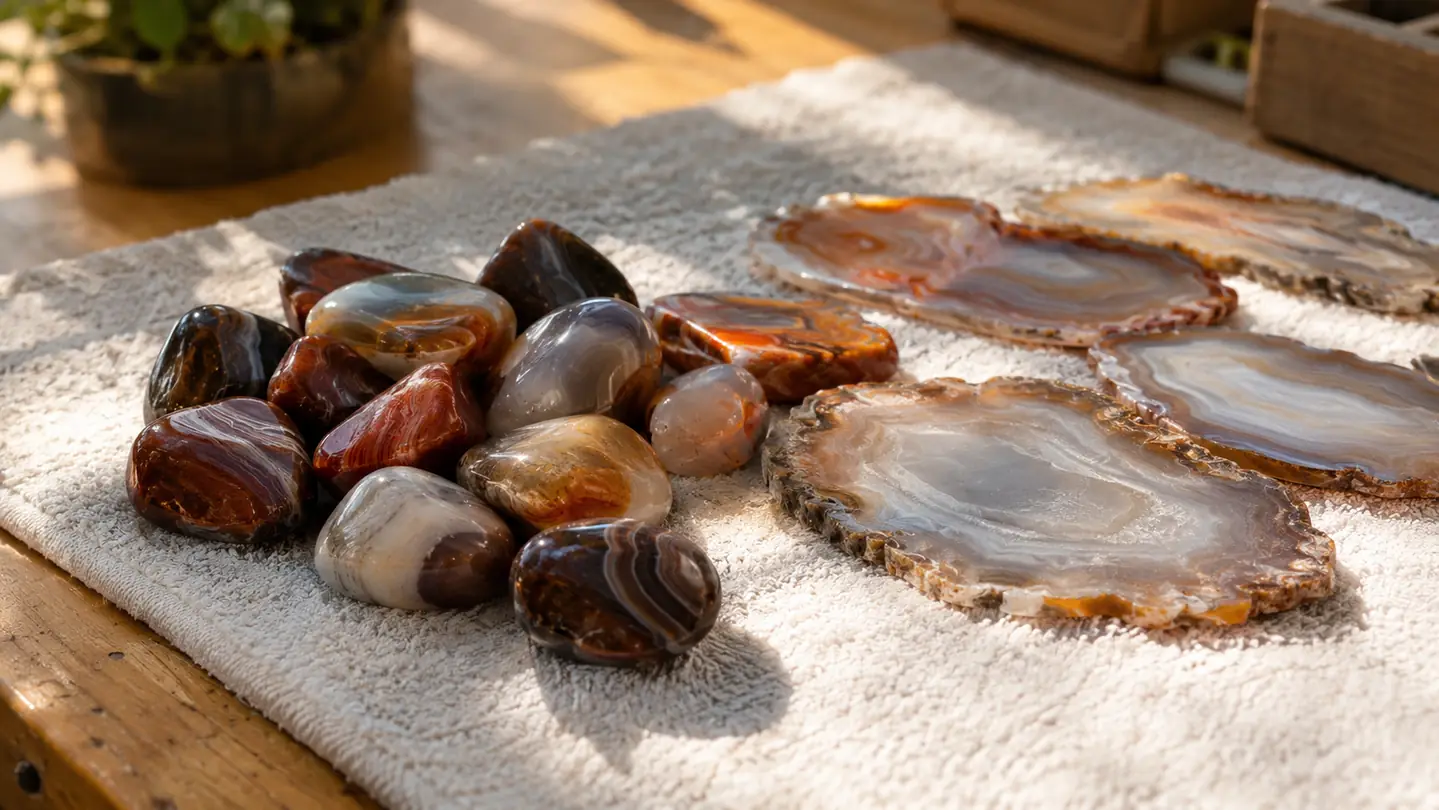
The last grit stage is the polish, and this is where agate finally starts to look like agate. I use the aluminum oxide polish from the kit and run it for seven days. Fill the barrel the same way, add the polish, and let the timer do its job. When you rinse the stones, the water should feel slick, which tells you the polish did its work. If the stones look milky or hazy, that is usually leftover polish on the surface, not a failed batch.
The burnish is the step that makes the difference between a nice polish and a glassy one. After the polish stage, wash the stones and the barrel again, then run the stones for four to six hours with a tablespoon of grated bar soap, the plain white kind, and water. The soap lifts the last film of polish off the stone. Rinse one more time and lay the agates on a towel to dry.
For agate specifically, some tumbling folks switch to cerium oxide for the final polish, because agate is a silica stone and cerium oxide is made for silica. I have tried both. The aluminum oxide in the kit does a fine job. The cerium oxide gives a slightly deeper shine on the translucent pieces. Neither one makes up for a rushed coarse grind or a skipped cleaning. If the earlier stages were done right, both will polish.
How Long Should You Plan For?
From rough rock to polished agate, plan on five to six weeks for a full run with the routine above: eight days coarse, five to seven days medium, five to seven days fine, seven days polish, plus the cleaning days in between. That sounds like a long time, and it is. It is also how the hobby works. A rotary tumbler trades speed for gentleness, and agate rewards patience more than any stone I know. If you need results in a week, this is not the tool for you, and I would rather tell you that now than after you have spent a month on a batch.
If you tumble in the summer in Tucson, you will also fight evaporation. I check my barrels every few days and top off the water level, because a barrel that runs dry does nothing but polish air. That is also a good excuse to peek at the batch and make sure nothing has jammed against the lid.
What Else Helps
Three things make the whole process easier. Keep a notebook. I write down the date, the grit, the fill level, and what the batch looked like when it came out. Twelve years in, my notebook is the most useful tool on my bench. Second, buy extra coarse grit. You will run the coarse stage more often than any other, and running out mid-batch is how you end up with a barrel of half-finished stones. Third, save your tiny agate chips and broken pieces. They make excellent barrel filler for topping up a load.
Also plan for the noise. A rotary tumbler is a machine, and it is not quiet. The Dan&Darci runs quieter than some I have used, but it is still a barrel of rocks. If you have a dog like Biscuit who hates rattling, put the tumbler as far from the door as the cord allows, or run it in the garage with the house door closed. And stock up on grit at the Tucson gem show every winter, where the prices are better than anywhere online.
One last thing. Do not be afraid to start over. I have re-run plenty of batches from the medium stage because I got impatient and moved up too fast. The barrel does not care, and the stones will not hold a grudge. A re-run takes a week. A ruined batch takes a month to fix, if it can be fixed at all.
The coarse grind on agate is an eight-day job and the cleaning between stages is a twenty-minute job. Skipping the twenty minutes is how you waste the eight days.
Ready to Run a Batch the Right Way?
The Dan&Darci Advanced Professional Rock Tumbler Kit comes with the digital 9-day timer, the full set of grits, and the rough stones you need for the routine above. The one thing it does not include is patience, and that part you have to bring yourself. Check today's price on Amazon.
Amazon Check Today's Price on Amazon →