
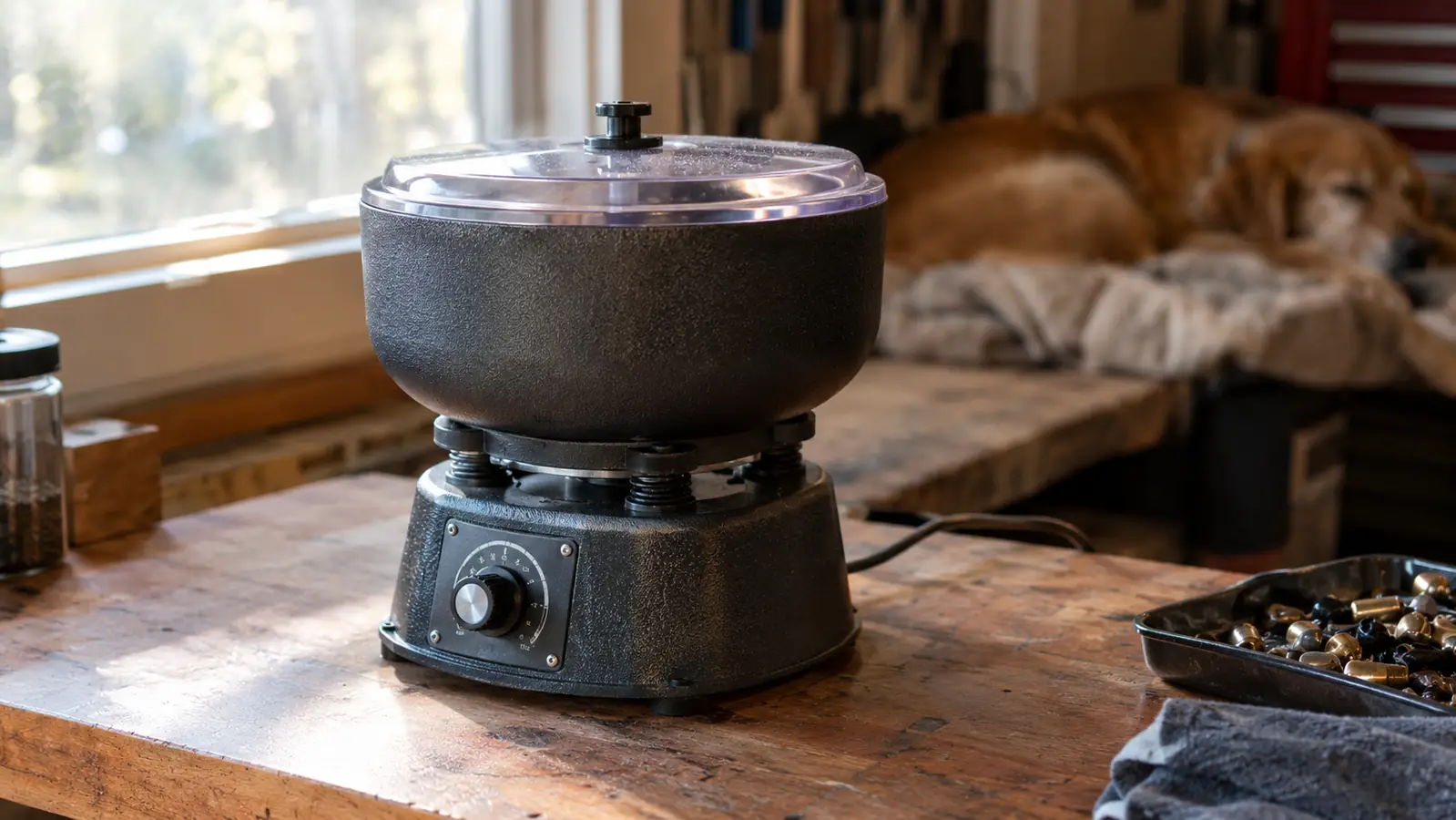
If you have ever run a rotary tumbler, you know the wait. Four weeks for a rough batch, two more for the polish stage, and every time you open the barrel you hope the grit did its job. I ran rotaries for years before I bought a Raytech TV-5 vibratory tumbler, and the difference is not subtle. The same stones that took six weeks in a rotary come out of the vibratory in about ten days. Here are the ten reasons why, in the order they matter to me.
Want the polish without the six-week wait?
The Raytech TV-5 is the vibratory tumbler I reach for first on my garage bench. It runs quietly, sips power, and turns rough agate into glossy stones in about a third of the time.
Amazon Check Today's Price on Amazon →The bowl never stops moving
A rotary barrel lifts the load, drops it, lifts it again. Between drops, the stones sit still. A vibratory bowl shakes the whole load continuously, so the abrasive is always working. That constant motion is the single biggest reason a vibratory tumbler finishes faster. I noticed it the first week I owned the Raytech TV-5: I set a batch of agate from the Santa Cruz River wash on a Tuesday night, and by Friday morning the rough edges were already gone. With my old rotary, that same stage took a full two weeks.
The stones slide against each other instead of falling
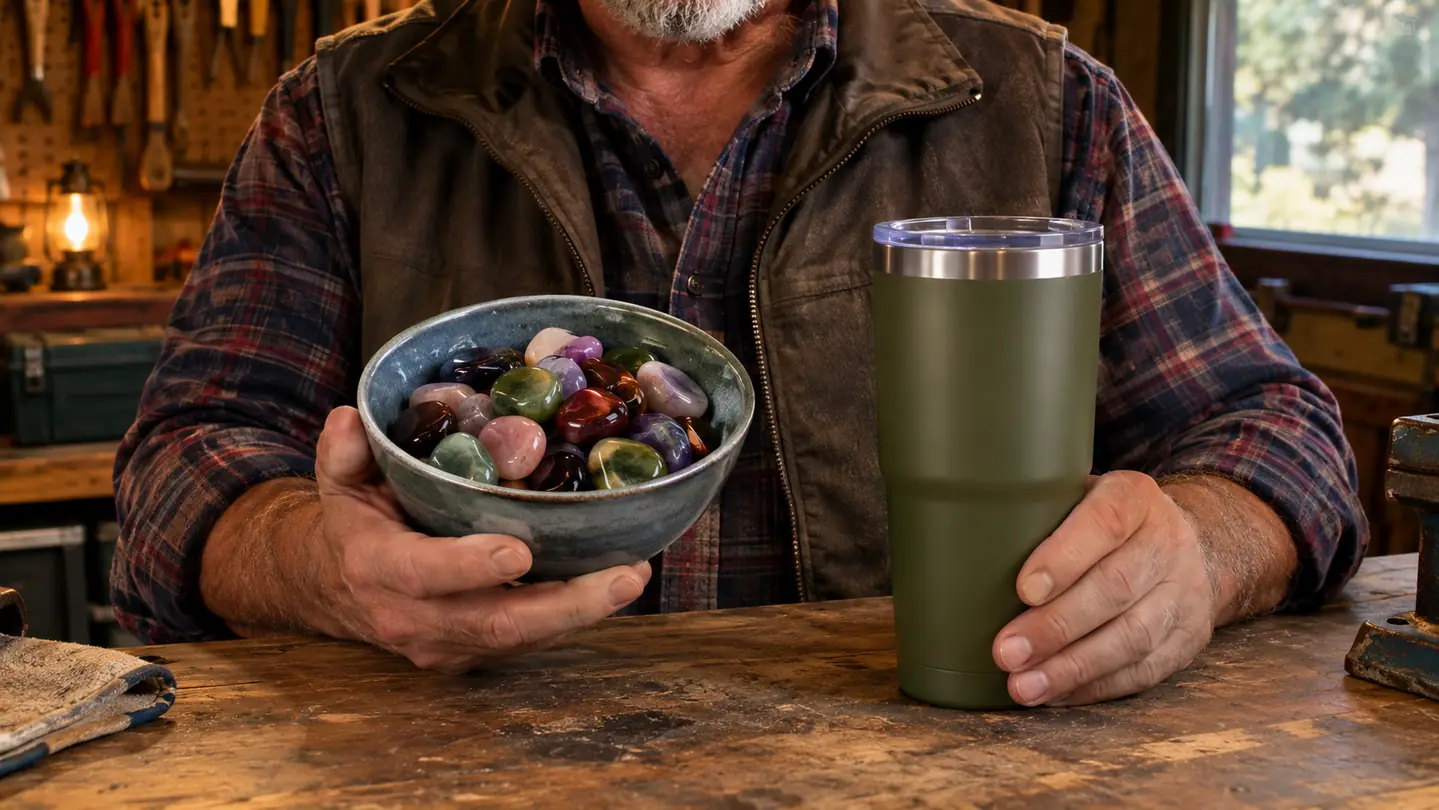
In a rotary, stones tumble end over end and bang into each other. In a vibratory, they slide in a slow spiral around the bowl. Sliding contact cuts and polishes far more efficiently than dropping, which is why the same grit does more work per hour. I tested this side by side one winter with two batches of the same jasper. The rotary batch needed a full four weeks in coarse grit. The Raytech batch was ready to move to medium grit after nine days, and the stones had fewer chips and bruises from impact.
You can check the batch without stopping it
With a rotary, opening the barrel means stopping the whole cycle and resealing it. With the Raytech TV-5, I just lift the lid and look. I can pull a stone, rinse it, and put it back in seconds. That means I catch undercutting early instead of discovering it two weeks later. Last spring I caught a batch of moss agate starting to pit on day three. I pulled the stones, rinsed them, and switched to a lighter grit before the damage spread. That one check saved the whole batch.
The load stays in contact with the grit
In a rotary, the grit settles and the stones roll through it in cycles. In a vibratory, the slurry coats every stone continuously. The abrasive is always where the work happens, so the polish builds up evenly and quickly. I run about two and a half pounds of stone in the TV-5 with a tablespoon of grit and just enough water to make a creamy slurry. The whole load stays wet and active, and I do not have to stop and stir it the way I did with the rotary.
Small batches finish faster than big ones
The Raytech TV-5 is built for two to three pounds of stone, not the five or six pounds a rotary barrel holds. Smaller loads mean each stone gets more contact with the media and the grit. I get better results running three small batches than one big one. When I tried to push the TV-5 to four pounds, the spiral action slowed and the stones in the center came out dull. Dropping back to two and a half pounds fixed it, and the batch finished in eight days instead of the twelve the overloaded run took.
The open bowl sheds heat
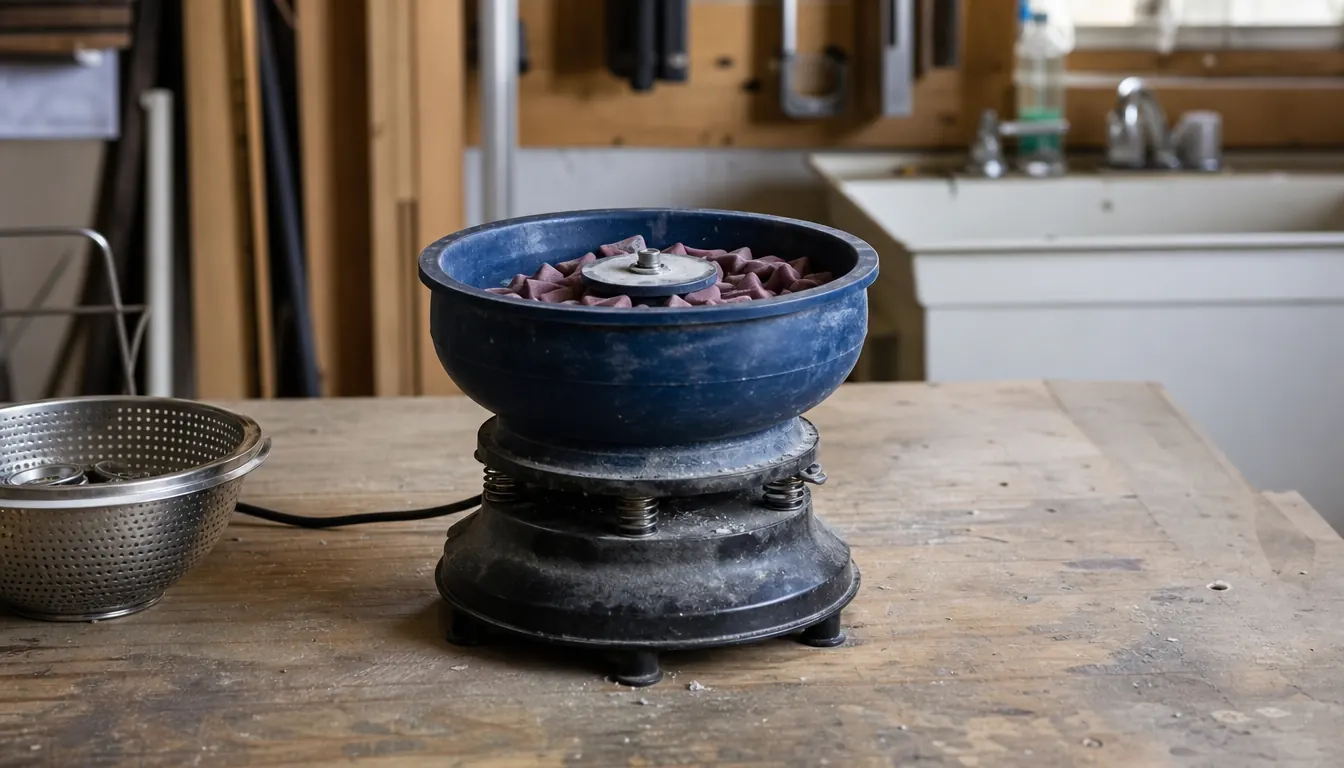
Rotary barrels trap heat, which can dry out the slurry and stall the process. The open bowl of the Raytech TV-5 lets heat escape, so the slurry stays wet and active. A cool, wet load polishes faster than a hot, dry one. On a hundred-degree Tucson afternoon, my garage hits the high nineties, and the TV-5 still runs without the slurry turning to paste. I check the water level once a day, add a splash from the utility sink, and let it keep going.
You can run it while you sleep
The TV-5 is quiet enough that I run it in the garage with the door closed. My dog Biscuit sleeps on his blanket a few feet away and does not stir. A rotary barrel thumps and rattles; the vibratory hums. More running hours means faster results. I start a batch on Sunday evening and let it run through the week, checking it each morning with my coffee. That steady overnight running is where the time savings really add up.
The spiral action sorts the stones as it polishes
The bowl's spiral channel moves larger stones to the outside and smaller ones to the inside. That natural sorting means the load stays mixed and the media reaches every stone. No dead spots, no stones hiding in the center of the load. I have run the TV-5 with everything from thumbnail-sized agates to two-inch chunks of petrified wood, and the spiral keeps them all moving. The bigger pieces ride the outside track while the small ones work through the middle, and every stone gets its turn against the media.
You can switch grits without a full cleanup
With a rotary, changing from coarse to fine grit means emptying the barrel, washing every stone, and scrubbing the barrel. With the Raytech TV-5, I rinse the load in a colander under the utility sink, wipe the bowl, and start the next stage. The whole change takes twenty minutes instead of an afternoon. I timed it once: from the moment I turned off the TV-5 to the moment the next grit was running, it was eighteen minutes. That quick turnaround means I can run three stages in a week instead of three stages in a month.
The finish is more consistent
Because every stone gets the same continuous contact, the final polish is even across the whole batch. I still get the occasional stone that needs another round, but I no longer get the mix of glossy and dull that rotary barrels gave me. Consistent results mean fewer reruns, and fewer reruns mean faster overall. A batch of Arizona agate I ran last fall came out so even that I gave half of it to my wife Carol for her garden pots and kept the rest for the gem show table.
What I'd Skip
I would skip the vibratory tumbler if you mostly work with very large stones or if you want to process five pounds at a time. The TV-5 is a two to three pound machine, and cramming it full slows the spiral action and leaves the center of the load under-polished. I would also skip it if you are the kind of person who likes to set a barrel and forget it for a month. A vibratory wants a little more attention: checking the slurry, adding water, swapping grits. That attention is exactly why it finishes faster, but it is not for everyone.
The same stones that took six weeks in a rotary come out of the vibratory in about ten days.
Ready to cut your tumbling time by two thirds?
The Raytech TV-5 has been on my bench for years and it still runs like the day I bought it. If you are tired of waiting six weeks for a batch, this is the machine that changed my routine.
Amazon Check Today's Price on Amazon →