
I have tumbled rocks in my garage for about twelve years, so I have a pretty good idea what a machine will and will not do before I buy it. I still bought the Raytech TV-5 on the strength of a few reviews and a hope. After running it most weeks for a year, I can tell you what the product page leaves out: the noise, the learning curve, the batches I ruined, and why I would still buy it again tomorrow.
This is the honest version. If you want the short answer: the Raytech TV-5 is a solid, made-to-work vibratory tumbler that rewards patience and punishes shortcuts. It is not a toy, it is not silent, and it will not polish a batch of rocks that you refuse to prep properly. What it will do, once you learn its habits, is put a shine on stones that a rotary tumbler would take two or three times as long to deliver.
The Quick Verdict
The Raytech TV-5 is the machine I reach for when I want fast results and a good shine, as long as I respect the prep work and the noise.
Amazon Check Today's Price →Ready to speed up your tumbling?
The Raytech TV-5 cuts days off every batch if you feed it the right grit and media. Check today's price on Amazon and see if it fits your workbench.
Amazon Check Today's Price on Amazon →How I've Used It
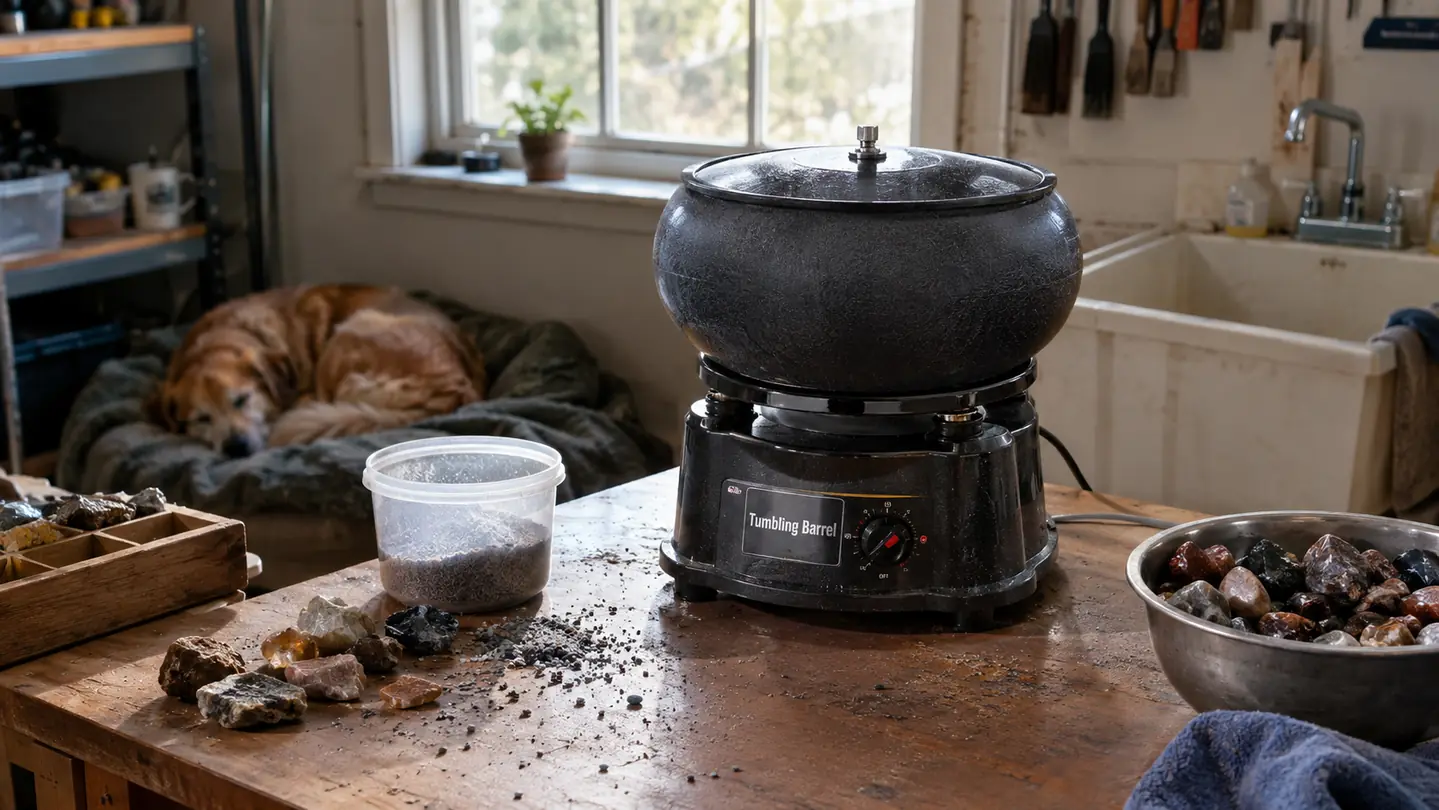
My setup is plain. I have a workbench in a detached garage with a utility sink beside it, and a red heeler mix named Biscuit who naps on a blanket in the corner. The first time I ran the TV-5, Biscuit got up and moved to the far end of the garage. That told me more about the noise than any spec sheet did. I clocked the run that first afternoon at a steady hum I could feel through the bench, and I knew right then the machine would live in the garage, not in the house.
I have run the TV-5 with agates from a creek bed east of Tucson, with jasper picked up on a day trip near the desert washes, and with the occasional bin of mixed rough from the Tucson gem show every winter. Most of my runs are three to five days, and I have kept the same two-quart load of ceramic media for almost the whole year. I have also made every mistake a beginner can make, including the one that cost me a batch of good fire agate. That batch went in on a Tuesday in March, and by Friday I knew I had ruined it.
The Raytech TV-5 is a vibratory tumbler, which means it works differently from a rotary tumbler. A rotary barrel rolls the rocks over each other, which shapes them but takes weeks. The TV-5 shakes the bowl so the stones and grit slide against each other in a constant motion. That motion is what gives the fast, bright polish, and it is also what makes the machine so fussy about load size, media, and grit. The bowl on mine measures about nine inches across, and I have learned to treat that measurement as a limit, not a suggestion.
What Nobody Tells You Before You Buy
The first thing nobody tells you is the noise. The TV-5 is not loud enough to be dangerous, but it is loud enough that you will hear it through a closed door. It is a steady, rattling, grinding hum that never changes, and it runs for days at a time. In my garage it is fine. If you planned to run it in a spare bedroom or an apartment, think again. Your household will not thank you. I measured mine once with a phone app just out of curiosity, and it sat around 70 decibels from three feet away, which is roughly the level of a loud conversation that never stops.
The second thing nobody tells you is that the TV-5 expects you to know what you are doing. The instructions are adequate, but the machine punishes the gaps. Load it too full and the motion stops. Load it too light and the stones hammer each other instead of sliding. Skip the pre-polish and you will spend a week wondering why the shine never comes. Every one of those mistakes I made myself, and every one of them is fixable. The overloaded batch taught me the most: I packed the bowl to the rim with wet stones, and within an hour the top layer was just sitting there, vibrating in place while the bottom did all the work.
The third thing is the one that almost made me send it back. For the first month, my polish was mediocre. I followed the instructions, used the grit that came with the machine, and got results that looked barely better than my old rotary tumbler. I was ready to call the Raytech TV-5 a dud. Then a friend at the gem show told me to check my water level, and that single change turned the machine around. The difference between a good run and a flat run is often a few drops of water. I started adding water with an eyedropper instead of a squirt bottle, and my next batch of moss agate came out with a mirror finish that I had never gotten from the rotary in ten years.
The difference between a good run and a flat run on the Raytech TV-5 is often just a few drops of water.
The Learning Curve, In Plain Terms
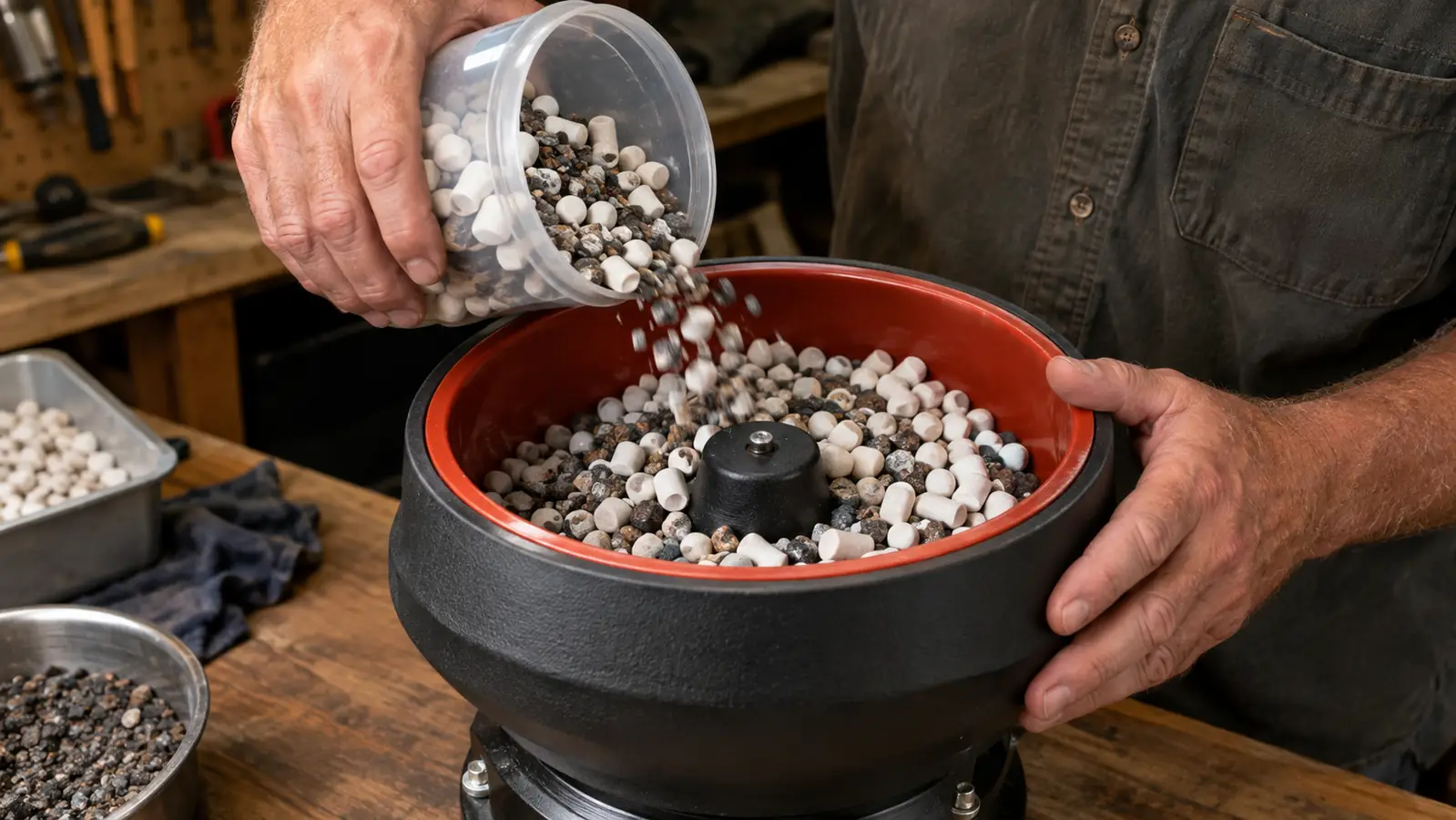
Let me walk you through the routine that finally worked for me. I clean the bowl, add the stones, add the ceramic media to fill the gaps, then add the grit. I sprinkle in water a few drops at a time while the machine runs until the slurry has the consistency of thin cream. Too dry and the rocks just vibrate in place. Too wet and the grit washes out and the motion turns mushy. You are looking for that sweet spot where the top layer of stones is slowly turning over. On my machine that sweet spot sits at roughly two tablespoons of water for a two-quart load, added in three or four passes over the first hour.
The Raytech TV-5 does the shaping work much faster than a rotary, but that speed has a cost. You cannot walk away for two weeks and come back to a finished batch. You check it daily, sometimes twice a day. The slurry dries out, the water evaporates, and the motion changes. A vibratory tumbler is a machine you tend, not a machine you start and forget. I keep a small notebook on the bench and write down the date, the stone type, the grit stage, and how much water I added. That notebook is what turned my results from hit or miss into something I can repeat.
I also learned to weigh my loads instead of eyeballing them. The TV-5 likes a bowl about half to two-thirds full of stones and media, and the weights matter more than the volumes. Once I started keeping the load consistent, my results became consistent too. That is the whole approach to this machine, and it is not complicated. It is just careful, boring, repeatable work. My standard load now is two pounds of stones, one pound of ceramic media, and a level scoop of grit, and I have written that recipe on a piece of tape stuck to the side of the bowl.
What the Raytech TV-5 Does Well
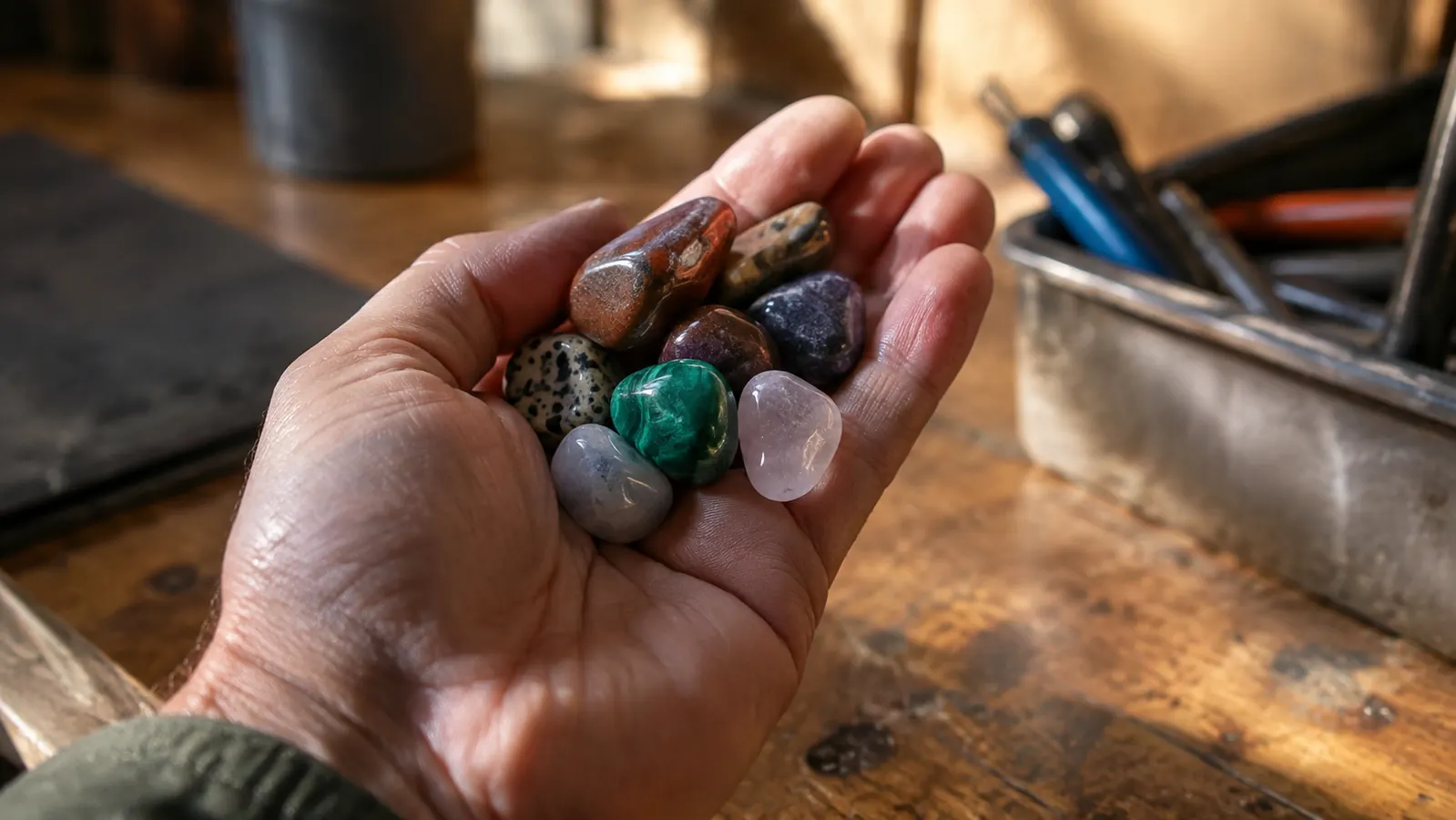
When you feed it right, the Raytech TV-5 produces a shine that is hard to believe the first time you see it. My first really good batch was a set of sagenite agates that had been sitting in a drawer for years. In four days they came out with a gloss that made my wife Carol stop and look. She does not care about rocks, and she noticed. I held one up to the garage light and could see my own reflection in the face of the stone, which is the moment I stopped doubting the machine.
The speed is the real advantage. A rotary tumbler running the same stones through the same grit stages would take two to three weeks. The TV-5 did the same work in four to six days. For a hobbyist who wants to see results, that difference matters. It also means you can run more batches in a year, which is how I ended up with a shelf full of finished cabs and a growing pile of ones I have not set yet. Last winter I ran eleven batches between the gem show in February and the end of April, which is more finishing work than I used to do in a full year with the rotary.
The build quality is honest. The Raytech TV-5 is not a fragile toy. The bowl is a solid plastic that has survived a year of regular use, including the batch I overloaded and the one where I let the slurry dry into a crust. The motor has not complained once. I have had cheap tumblers that started sounding rough after three months, and this one still hums the same steady note it did on day one. The lid snaps on tight, the base does not walk across the bench, and the cord is long enough that I do not need an extension cord, which is a small thing that still annoys me when it is missing on other machines.
What I Liked
- Fast polish, usually four to six days instead of weeks
- Solid build that has handled a year of hard use
- Simple setup once you learn the water and load routine
- Great for finishing stones that a rotary already shaped
Where It Falls Short
- Noisy enough that it belongs in a garage or shed
- Steep learning curve for the first few batches
- Needs daily checking while it runs
- Not a shaping machine, it shines what you prep
Where It Falls Short
The biggest weakness of the Raytech TV-5 is that it does not shape rough stones. A vibratory tumbler is a finishing tool. It will not take a jagged piece of rough and round it into a cab. You still need a rotary tumbler or a lot of patience with a grinder to do the coarse shaping. I keep both machines on my bench because they do different jobs. The rotary gets the ugly first two weeks, and the Raytech gets the last four days, and together they turn a rock I found in a wash into something I am proud to give away.
The noise is the second weakness. I am not going to pretend it is fine. It is a constant rattle that you can hear through the house, and Biscuit has never once chosen to nap near it. If you are noise sensitive or you live close to neighbors, you need to plan where this machine will live before you buy it. I set mine on a rubber mat with a folded shop towel under the base, and that cut the bench vibration enough that the machine stopped creeping across the workbench, but it did not make it quiet.
The third weakness is the one that cost me a batch of fire agate. I got impatient, skipped the pre-polish stage, and ran the stones straight from the coarse grit into the polish. The result was a batch of hazy, dull agates that I had to run all over again. The Raytech TV-5 is not a machine that forgives skipped steps. It will faithfully amplify whatever shortcuts you take. I ran that ruined batch back through the pre-polish for three days, then the polish for four, and they came out acceptable, but I lost a week and a half that I could have spent on stones that were ready.
Who This Is For
The Raytech TV-5 is for the rock hound who already has a rotary tumbler and wants a faster way to finish stones. It is for the person who checks on a batch every morning with a cup of coffee and enjoys the tinkering as much as the result. It is for the hobbyist who wants a bright polish without waiting three weeks for it. If you are the kind of person who keeps a notebook on the bench and writes down what worked, this machine will reward you.
It is also for anyone who likes a machine that feels like a proper tool. The Raytech brand has a long history in this hobby, and the TV-5 feels like it was designed by someone who actually tumbles rocks. That matters to me, and it probably matters to you if you have already ruined a cheap tumbler or two. The Raytech name on the base is not just a sticker, it is a promise that the people who built it have run one themselves.
Who Should Skip It
Skip the Raytech TV-5 if you are brand new to tumbling and have never run a rotary machine. Learn the basics first. A rotary tumbler is more forgiving, it shapes rough stones, and it gives you time to understand grit stages without the daily attention this machine demands. I tell beginners to run three or four rotary batches before they even think about a vibratory machine, because the TV-5 will not teach you the fundamentals, it will just punish you for not knowing them.
Skip it if you need silence. This is not the tumbler for an apartment, a shared wall, or a quiet hobby room. And skip it if you expect a machine to do the thinking for you. The TV-5 is a tool for people who want to learn its habits, not a set-and-forget appliance. If that sounds like work, it is, and the shine is the payoff. I have owned mine for a year, I have ruined batches with it, and I would still buy the same machine again tomorrow.
Give your stones the finish they deserve
The Raytech TV-5 is the fastest path I have found to a bright, even polish, and it has earned its spot on my bench. Check today's price on Amazon and see why it is the finishing step I do not skip.
Amazon Check Today's Price on Amazon →